
Why SEO in 2026 Is Harder — but Fairer — Than Ever
If you were doing SEO between 2015 and 2020, ranking on Google often meant one simple formula: optimize keywords + build backlinks. In 2026, that mindset is no longer just outdated — it’s dangerous.
Google no longer evaluates websites based on isolated tactics. Instead, it relies on a complex ecosystem of algorithms and AI-driven systems to answer one core question:
“Does this content truly deserve to rank at the top for users?”
Many websites today lose rankings without spamming, without buying bad links, and without manual penalties. The real reason is simple: they misunderstand how Google’s core algorithms work and optimize in the wrong direction.
In this in-depth guide, we’ll break down 10+ of the most important Google algorithms in 2026, how Google uses them to rank content, and the most common mistakes that cause sudden ranking drops.
How Google Really Works in 2026
Before diving into individual algorithms, you need to understand one critical truth:
There is no single Google algorithm.
Google operates using:
- Core ranking algorithms
- Content evaluation systems
- AI & machine learning models
- User behavior and engagement signals
These systems work together, with different weightings depending on the industry:
- YMYL niches (finance, health): Trust & EEAT carry the most weight
- Local SEO: Entity signals, proximity, and reviews dominate
- Informational content: Helpful Content + expertise are key
SEO in 2026 is about system-level optimization, not tricks.
Learn more about our website design services.
1. Google Core Updates – The Backbone of Rankings in 2026
Google Core Updates are not penalties, filters, or manual actions. They are broad, systemic changes designed to re-evaluate how Google interprets quality, relevance, and trust across the entire web.
Instead of targeting specific tactics, Core Updates reweight existing signals and redefine what “high-quality content” means in real-world user contexts.
What Core Updates Actually Do (Behind the Scenes)
In 2026, Core Updates primarily focus on:
- Reassessing content usefulness at scale, especially in saturated niches
- Rebalancing signal importance (e.g. reducing keyword relevance in favor of experience and credibility)
- Elevating brands and entities with consistent trust signals
- Demoting content that technically complies with SEO rules but lacks real value
Core Updates work more like a ranking recalibration, not a punishment mechanism. A site may lose visibility simply because other sites now better satisfy user intent.
Why Websites Lose Rankings After Core Updates
Common root causes include:
- Large volumes of thin or overlapping content
- Articles written with no real expertise or first-hand experience
- Weak brand signals compared to competitors
- Outdated content that no longer matches search intent
Importantly, nothing may be “wrong” technically—yet rankings still drop.
How to Optimize for Core Updates in 2026
To align with Core Updates:
- Perform content pruning: remove, merge, or upgrade low-value pages
- Build pillar content that demonstrates depth, authority, and topical ownership
- Strengthen brand-level trust signals (mentions, reviews, citations, consistent identity)
- Focus on long-term value, not short-term ranking tactics
In 2026, Core Updates reward websites that behave like experts — not SEO technicians.
See More: Best Web Developer Singapore | Build Fast, Secure & SEO-Friendly Websites
2. Helpful Content System – Eliminating SEO-First, User-Last Content
The Helpful Content System is one of the most disruptive changes Google has introduced in the past decade. Since 2023, it has systematically devalued content written primarily to rank, rather than to help.
Unlike traditional penalties, this system applies a site-wide classification that can suppress visibility across many pages.
What Google Is Evaluating
Google analyzes whether content:
- Is written by someone who actually knows the topic
- Demonstrates first-hand experience or original insight
- Fully satisfies the primary search intent
- Helps users accomplish a task or make a decision
Helpful Content is not about length or formatting — it’s about usefulness density.
Characteristics of Unhelpful Content
Content is flagged as unhelpful when it:
- Exists mainly to capture keywords
- Repeats information already found everywhere else
- Adds no new perspective, examples, or explanations
- Forces users to search elsewhere for answers
Even well-written content can fail if it doesn’t truly help.
Best Practices for Helpful Content in 2026
To align with this system:
- Write from real-world experience (case studies, workflows, lessons learned)
- Address secondary and follow-up questions within the same article
- Show why something works, not just what it is
- Regularly update content to reflect changes in the industry
In 2026, Google does not reward “SEO content” — it rewards content that replaces the need to search again.
3. EEAT – The Foundation of Trust-Based Rankings
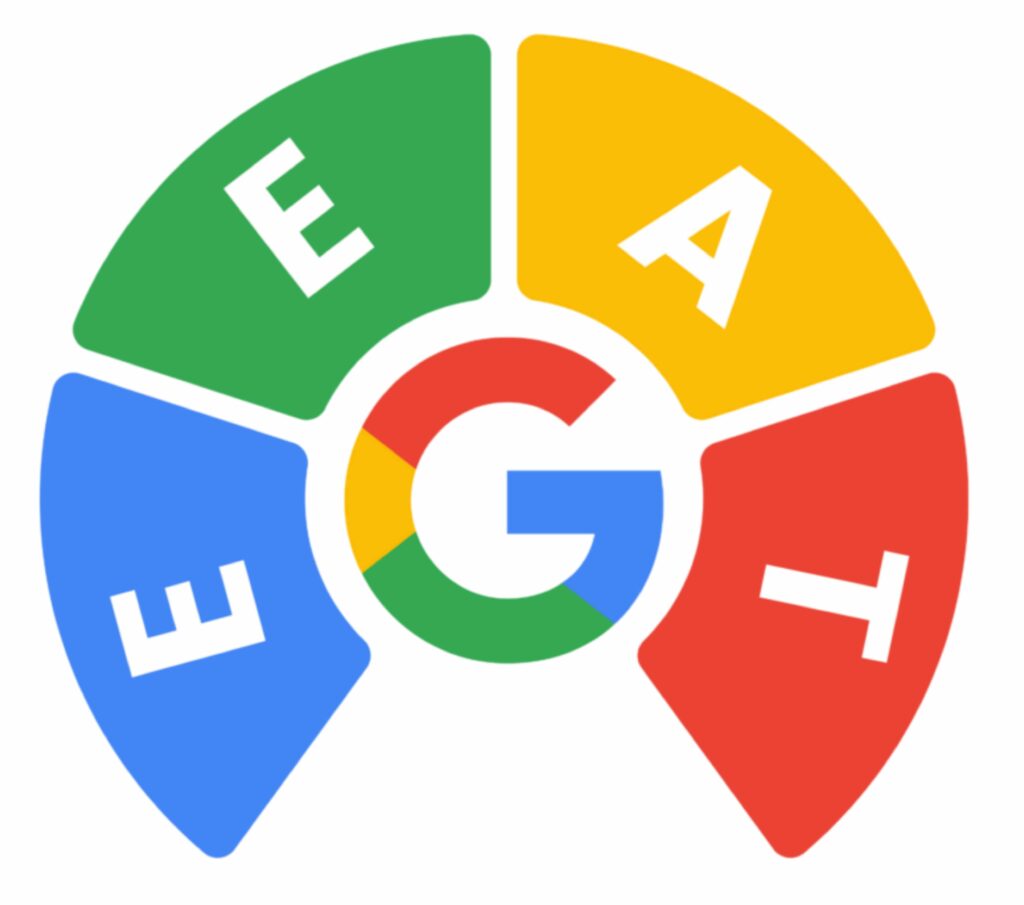
EEAT (Experience, Expertise, Authority, Trust) is not a ranking algorithm on its own. It is a quality evaluation framework embedded across Google’s systems, particularly impactful in competitive and YMYL niches.
In 2026, EEAT plays a central role in determining which content deserves visibility, not just which content is relevant.
What EEAT Means in Practice
Google looks for:
- Experience: Evidence that the author has personally used, tested, or worked with the topic
- Expertise: Demonstrated depth of knowledge and understanding
- Authority: External recognition through mentions, citations, and reputation
- Trust: Transparency, accuracy, and accountability
EEAT is evaluated at both content and brand levels.
Common EEAT Failures
Many sites struggle because they:
- Publish anonymous or generic content
- Lack author attribution and credentials
- Provide no business transparency
- Rely solely on on-page SEO without off-site validation
How to Optimize EEAT in 2026
Effective EEAT optimization includes:
- Detailed author bios with credentials and experience
- Real case studies, original data, and hands-on insights
- Clear About, Contact, and editorial policy pages
- Consistent brand presence across trusted platforms
In modern SEO, authority is earned outside your website — rankings simply reflect it.
See More: Website Design Price Guide 2025 | How Much Does It Really Cost?
4. RankBrain – Google’s AI for Interpreting User Satisfaction
RankBrain is Google’s first large-scale machine learning system, and in 2026 it remains a core decision-making layer for how search results are interpreted and reordered.
RankBrain does not “rank pages” directly. Instead, it interprets search intent and measures how well results satisfy users — then feeds that data back into Google’s ranking systems.
What RankBrain Really Does
RankBrain is primarily responsible for:
- Understanding new, long-tail, or ambiguous queries
- Identifying implicit intent (what users really want, not just what they typed)
- Measuring satisfaction based on post-click behavior
This allows Google to adjust rankings dynamically, even without changing the algorithm itself.
User Signals RankBrain Pays Attention To
In 2026, RankBrain focuses on behavioral patterns, not isolated metrics:
- Click-through rate (CTR): Whether users choose your result over others
- Dwell time: How long users stay before returning to search
- Pogo-sticking: Rapid back-and-forth between search results
These signals are interpreted comparatively, not absolutely. A “good” dwell time depends on the query type.
Why Content Loses Rankings Under RankBrain
Pages tend to underperform when:
- Headlines overpromise but content underdelivers
- Content structure makes answers hard to find
- Pages fail to satisfy the primary intent quickly
High bounce rates are not the issue — unsatisfied users are.
How to Optimize for RankBrain in 2026
Effective optimization focuses on alignment, not manipulation:
- Match headlines and meta descriptions precisely with intent
- Deliver the main answer early, then expand depth
- Use clear headings, scannable layouts, and logical flow
- Reduce friction that delays value delivery
RankBrain rewards pages that feel “right” to users — not pages that look optimized.
5. BERT – Understanding Meaning Beyond Keywords
BERT (Bidirectional Encoder Representations from Transformers) allows Google to understand context, relationships, and nuance in language. In 2026, BERT is deeply embedded in query interpretation and content evaluation.
Unlike older systems, BERT does not match words — it understands how words relate to each other.
What BERT Changes in SEO
BERT enables Google to:
- Interpret prepositions, modifiers, and conversational phrasing
- Distinguish subtle intent differences between similar queries
- Understand natural, human language more accurately
This is especially important for long-form and informational searches.
Common SEO Mistakes Under BERT
Many sites still fail because they:
- Force exact-match keywords unnaturally
- Write for bots instead of humans
- Fragment content to target variations of the same query
These practices weaken semantic clarity.
Best Practices for BERT Optimization
To align with BERT:
- Write in natural, conversational language
- Cover topics holistically instead of repeating keywords
- Use semantic keywords and related concepts
- Answer questions as a human expert would
If your content sounds unnatural to read, BERT likely doesn’t trust it either.
See More: Top Tips for Website Design in Singapore: Boost Your Business Online
6. MUM – Google’s Multi-Modal Intelligence Engine
MUM (Multitask Unified Model) represents a major leap in Google’s ability to understand information across formats, languages, and contexts.
MUM can analyze and connect:
- Text
- Images
- Video
- Information from multiple languages simultaneously
In 2026, MUM is critical for complex, research-driven queries.
What Makes MUM Different
MUM doesn’t just retrieve information — it synthesizes knowledge. It can:
- Combine insights from different sources
- Understand intent that spans multiple questions
- Identify which content provides the most comprehensive guidance
This shifts SEO away from single-article answers toward content ecosystems.
SEO Implications of MUM in 2026
Under MUM:
- Shallow, surface-level content consistently loses visibility
- Articles that answer only one narrow question struggle
- Comprehensive, experience-driven resources perform best
How to Optimize for MUM
Effective strategies include:
- Creating in-depth pillar content with contextual depth
- Supporting articles with images, diagrams, or videos
- Anticipating follow-up questions and addressing them proactively
- Structuring content for clarity, not just keywords
In the MUM era, Google ranks understanding — not pages.
7. SpamBrain – Google’s AI-Powered Spam Detection System
SpamBrain is Google’s AI-driven system designed to identify and neutralize manipulation at scale. Unlike traditional rule-based filters, SpamBrain continuously learns from patterns across the web.
It does not just detect spam — it understands intent behind manipulation.
What SpamBrain Actively Targets
In 2026, SpamBrain focuses on:
- Artificial link patterns (PBNs, paid link networks, link exchanges)
- Automated or mass-produced content
- Manipulated anchor text distributions
- Recycled content designed solely to rank
SpamBrain works in real time, meaning spam signals are discounted immediately, often without visible penalties.
Why Most Sites Don’t Need Disavow Files
A common SEO misconception is obsessing over toxic backlinks. In reality:
- SpamBrain already ignores most low-quality links automatically
- Disavowing links rarely improves rankings unless there is clear manual action
- Overusing disavow can even remove neutral or beneficial signals
How to Optimize for SpamBrain in 2026
The safest and most effective approach:
- Focus on earning links, not building them
- Prioritize editorial links from relevant contexts
- Avoid unnatural anchor text patterns
- Build brand visibility rather than link velocity
In 2026, spam is not punished — it is simply ignored.
8. Page Experience System – UX as a Supporting Signal
The Page Experience System evaluates how users interact with your site, not how visually attractive it is. It functions as a tie-breaker, not a primary ranking driver.
Core Components of Page Experience
Google evaluates:
- Core Web Vitals (LCP, INP, CLS)
- Mobile usability
- HTTPS security
- Intrusive interstitials
These signals help Google understand whether a page is frictionless or frustrating.
A Critical Misunderstanding
Many websites overinvest in UX optimization while neglecting content quality.
A fast, beautiful page with weak content will not rank.
A slow page with excellent content may still rank.
How to Optimize Page Experience Correctly
In 2026, optimization should be:
- Focused on removing blocking issues, not chasing perfect scores
- Mobile-first by default
- Designed to support content consumption, not distract from it
Page Experience enhances strong content — it does not replace it.
9. Link Spam Algorithm – Context Over Quantity
Google’s Link Spam Algorithm has evolved beyond counting backlinks. In 2026, it evaluates why a link exists, not just where it comes from.
How Google Evaluates Links Today
Google analyzes:
- Editorial context and surrounding content
- Topical relevance between sites
- Natural anchor usage
- Brand vs. keyword link balance
Links created solely for SEO purposes are often algorithmically neutralized.
Best Practices for Link Acquisition in 2026
Effective link strategies include:
- Digital PR campaigns
- Thought leadership content
- Brand mentions without exact-match anchors
- Industry-relevant citations
Links should be a byproduct of authority, not a substitute for it.
10. Freshness Algorithm – Relevance Over Recency
The Freshness Algorithm determines when new or updated content matters. Not all queries require freshness, and Google understands this distinction.
When Freshness Matters
Freshness is critical for:
- News and trends
- Technology updates
- Algorithm changes
- Time-sensitive industries
For evergreen topics, stability and authority matter more.
How Google Evaluates Freshness
Google looks at:
- Publication date relevance
- Meaningful content updates (not cosmetic edits)
- Ongoing topical engagement
Best Practices for Freshness Optimization
- Update content when the topic genuinely evolves
- Refresh statistics, examples, and references
- Maintain historical authority rather than chasing constant rewrites
Freshness is about staying relevant — not constantly rewriting.
See More: How to Check Website Credibility Using Quick Online Tools
11. Entity-Based Ranking & Knowledge Graph – How Google Understands Brands
In 2026, Google ranks entities, not just web pages. An entity can be a brand, company, person, or organization with a distinct identity.
How Entity-Based Ranking Works
Google builds entity understanding through:
- Knowledge Graph relationships
- Structured data
- Consistent brand mentions across trusted sources
A strong entity helps Google trust new content faster.
How to Optimize for Entity Recognition
To strengthen entity signals:
- Maintain consistent NAP (Name, Address, Phone)
- Implement structured data (Organization, Author, Product)
- Ensure brand mentions across authoritative platforms
- Align messaging across website, social, and citations
When Google trusts your entity, rankings become a side effect.
Learn more about our website design services.
SEO Myths That Cause Ranking Drops in 2026
Despite years of algorithm updates, many ranking drops in 2026 are still caused by outdated SEO beliefs rather than technical issues. These myths lead teams to optimize in the wrong direction — often with good intentions.
Myth 1: Longer Content Always Ranks Better
Word count has never been a ranking factor. In 2026, unnecessary length is a liability.
Google evaluates:
- How quickly a page satisfies intent
- Whether users need to continue searching
- The usefulness density of the content
Long content ranks only when depth is required by the query. Padding content to hit a word target often reduces clarity and user satisfaction — triggering RankBrain and Helpful Content downgrades.
Reality:
The best-ranking pages are as long as necessary — and no longer.
Myth 2: More Backlinks Automatically Mean Higher Authority
Backlinks are still important, but quantity without context is largely neutralized.
Modern link evaluation focuses on:
- Editorial relevance
- Brand mentions vs. keyword anchors
- Natural acquisition patterns
- Entity association
Mass link building may increase crawl signals, but it rarely increases authority in 2026.
Reality:
Authority is built through recognition, not link volume.
Myth 3: SEO Is a Purely Technical Discipline
Technical SEO ensures accessibility — it does not create rankings on its own.
Many technically “perfect” sites fail because:
- Content lacks real expertise
- Brand trust signals are weak
- User needs are not fully addressed
Google’s systems increasingly mirror human judgment, where credibility and usefulness outweigh optimization tricks.
Reality:
Technical SEO opens the door. Trust and value determine who walks through it.
See More: Best Professional Web Design Services in Singapore
SEO Checklist for Google Algorithms in 2026
Rather than chasing individual algorithms, successful SEO in 2026 follows a principle-based framework.
Content Excellence
- Written for users, not search engines
- Demonstrates real-world experience
- Answers primary and secondary intent
- Updated when the topic genuinely evolves
Technical Foundation
- Fast loading and stable performance
- Mobile-first usability
- Clean architecture and crawlability
- Secure and accessible pages
Trust & Authority
- Clear brand identity and positioning
- Author credibility and transparency
- Consistent mentions across trusted platforms
- Real proof: case studies, data, outcomes
In 2026, SEO success is the result of alignment — not optimization.
Looking for a professional website that converts visitors into customers?
Our team provides professional website design services in Singapore tailored to your business goals.
Contact us to schedule a free consultation and explore the right solution for your brand.