
1. Why Understanding Web Development Costs in Singapore Matters
In today’s digital-first economy, having a professional website is no longer optional. Whether you’re a startup, SME, or large enterprise in Singapore, your website is the foundation of your brand, marketing engine, and customer acquisition funnel.
But here comes the big question:
“How much does web development cost in Singapore?”
The truth is—there is no fixed price. The cost varies greatly depending on:
- The type of website you need
- The complexity of features
- The platform (CMS / custom-coded / eCommerce)
- The experience level of the agency
- Design requirements
- SEO & marketing needs
- Hosting, maintenance, and long-term support
This guide breaks everything down so you understand the real cost structure of Web Development Singapore, and how to choose the right solution that matches your business goals.
See More: Website Design Price Guide 2025 | How Much Does It Really Cost?
2. What Does Web Development Singapore Actually Include? (Clear & Easy to Understand)

When people think about Web Development Singapore, they often imagine it’s just “building a website.”
But in reality, a professional website project in Singapore involves many stages to ensure the site is well-designed, fast, secure, and effective for business.
Below is a simplified breakdown of what a complete web development service includes:
2.1 Website Strategy & Planning
This stage defines the purpose of your website and how it will serve your business.
- Business goals analysis
- Competitor research
- Creating the site structure (sitemap)
- User experience (UX) planning
- Content layout and planning
2.2 UI/UX Design
This is where the “look and feel” of the website is created.
- Wireframes (layout sketches)
- Full visual design
- Responsive design for desktop, mobile, and tablet
- Applying brand colours, fonts, and identity
2.3 Development (Frontend & Backend)
At this stage, the design becomes a working website.
- Coding with HTML, CSS, JavaScript
- Integrating CMS platforms (WordPress, Shopify, Webflow)
- Custom programming (Laravel, React, Node.js)
- Database setup
- Payment gateway integration (if needed)
2.4 SEO & Performance Optimization
This ensures your website loads fast and ranks better on Google.
- On-page SEO optimization
- Page speed improvement
- Image compression
- Adding Schema markup
- Optimizing URLs and meta tags
2.5 Security & Hosting
Every website needs strong protection and reliable hosting.
- SSL certificate installation
- Firewall setup
- Anti-malware protection
- Secure hosting environment
2.6 Testing & Quality Assurance (QA)
Before launching, everything must be tested thoroughly.
- Functional testing
- Cross-browser and cross-device testing
- Load testing for high traffic
2.7 Website Launch
The website is deployed and set live.
- Server deployment
- DNS setup and configuration
- Monitoring after launch to ensure no issues occur
2.8 Post-launch Maintenance
Websites need ongoing care to stay secure and updated.
- Monthly system updates
- Fixing bugs
- Security patching
- Updating or adding new content
See More: Best Web Design Agency In Singapore 2025 – Top Picks & Guide
3. Web Development Singapore Pricing: A Detailed Overview

Understanding the cost of Web Development Singapore can be challenging because pricing varies widely depending on the website type, features, design requirements, and the experience level of the developer or agency. However, the table below provides a reliable estimate based on current market standards in Singapore.
Estimated Pricing Overview
| Type of Website | Estimated Cost (SGD) | Best For |
| One-page Website | $500 – $1,500 | Startups, quick campaigns, simple landing pages |
| Basic Business Website (5–10 pages) | $1,500 – $5,000 | SMEs, service businesses, company introduction |
| Corporate Website (10–30 pages) | $5,000 – $12,000 | Established companies, multi-service firms |
| eCommerce Website | $3,500 – $25,000+ | Online stores, product businesses |
| Custom Web Application | $8,000 – $80,000+ | Portals, booking systems, internal tools |
| Marketplace / SaaS Platform | $40,000 – $200,000+ | Large-scale systems, multi-vendor platforms |
Why Prices Can Vary So Much?
There are several key factors that influence Web Development Singapore pricing. The more complex your website is, the more time, skill, and resources are required.
a. Website Complexity
The more pages, functions, or user interactions your website has, the higher the cost. For example:
- A simple landing page requires basic design and minimal coding.
- A multi-language corporate website requires advanced UX planning and content structure.
- A marketplace platform needs complex backend systems, user accounts, vendor dashboards, and payment workflows.
b. Design Requirements
Design greatly affects cost because high-quality UI/UX demands more time and expertise.
- Template-based designs are cheaper.
- Fully custom designs increase costs due to detailed wireframes, prototyping, and brand customization.
- Premium interactions and animations also add to the cost.
c. Development Platform
Each platform comes with a different pricing structure.
| Platform | Typical Cost Impact |
| WordPress | Most cost-effective for SMEs |
| Shopify | Higher cost due to apps & subscription fees |
| Webflow | More expensive due to designer-level control |
| Custom Coding (Laravel/React) | Highest cost due to complexity & scalability |
d. Features & Integrations
Every extra feature increases both development time and cost.
Examples include:
- Booking systems
- Membership or subscription platforms
- Advanced product filters
- CRM integration
- Custom dashboards
- API integrations
Some of these features alone can add $2,000–$20,000+ to the total cost.
e. Vendor Type
Who you hire also affects the cost.
Freelancers (Cheapest)
- Cost: $500 – $3,000
- Suitable for very small or simple websites
- Limited support and scalability
Local Agencies (Most Reliable)
- Cost: $3,000 – $80,000+
- Full team: designers, developers, UX specialists, project managers
- Better quality, faster delivery, long-term support
Enterprise-level Agencies (Premium)
- Cost: $40,000 – $200,000+
- Ideal for large corporations with complex requirements
Price Breakdown by Project Stages
A typical Singapore web development quote usually includes:
| Project Stage | Estimated Cost (SGD) |
| Research & Planning | $300 – $3,000 |
| UI/UX Design | $1,000 – $10,000 |
| Frontend Development | $1,000 – $20,000 |
| Backend Development | $2,000 – $40,000 |
| SEO Optimization | $300 – $3,000 |
| Testing & QA | $300 – $5,000 |
| Deployment | $200 – $2,000 |
This breakdown helps you understand where the budget goes—and why professional development isn’t just “coding.”
Hidden Costs You Should Be Aware Of
Even after the website is completed, there are ongoing costs to maintain smooth performance:
| Cost Type | Range (SGD) |
| Domain | $20 – $60/year |
| Hosting | $100 – $500/year |
| Maintenance | $80 – $300/month |
| Plugin Licenses | $100 – $800/year |
| Security Tools | $100 – $500/year |
These are essential and should be included in your long-term budget planning.
See More: Best Web Developer Singapore | Build Fast, Secure & SEO-Friendly Websites
4. Breakdown by Complexity: How It Affects Cost (Detailed & Easy to Understand)
In Web Development Singapore, one of the biggest factors that affects cost is the complexity of the website.
The more features, pages, integrations, and user interactions required, the higher the development time—therefore the higher the price.
Below is a detailed breakdown of four main complexity levels, what they include, and who they are suitable for.
4.1 Basic Websites (Least Complex)
Best for:
- Startups
- Small local businesses
- Personal brands or freelancers
- Simple landing pages or promotional sites
Common Features:
- 4–8 professionally designed pages (Home, About, Services, Contact, etc.)
- Basic contact form
- Mobile responsive layout
- Simple CMS (WordPress or Webflow)
- Basic on-page SEO
- Simple visuals & minimal interactivity
Examples of Basic Websites:
- Plumbing service website
- Interior design landing page
- Personal trainer website
- Cleaning service site
Estimated Cost: $1,500 – $5,000
These websites focus on presenting information clearly. They do not require advanced features or complex logic, but they still provide a polished, professional online presence.
4.2 Medium-Complex Websites
Best for:
- SMEs (Small–Medium Enterprises)
- Corporate websites
- Companies offering multiple services
- Businesses expanding their content or audience
Common Features:
- 10–30 pages structured with proper site architecture
- Fully custom UI/UX design
- Blog or news system
- Basic booking or inquiry system
- Multilingual support (2–3 languages)
- Better animations and interactions
- Advanced search or filtering
Examples of Medium-Complex Websites:
- Logistics company website
- Law firm or accounting firm website
- Clinic or medical center website
- Consulting company corporate site
Estimated Cost: $5,000 – $12,000
These websites take longer to design and build because they involve more pages, more content structure, and higher expectations for branding & user experience.
4.3 High-Complex Websites
Best for:
- Large companies
- E-commerce businesses
- Membership or subscription-based portals
- Organisations with custom workflows or user roles
Advanced Features:
- User accounts/logins
- Membership tiers or subscription functions
- Full e-commerce checkout system
- Inventory management
- API integrations (CRM, ERP, payment systems)
- Customer dashboards
- Marketing dashboards or analytics
- Custom product filters & dynamic content
Examples of High-Complex Websites:
- Large e-commerce stores
- Membership communities
- Online learning portals
- Real estate listing platforms
Estimated Cost: $12,000 – $40,000+
These projects require advanced backend logic, more security, and deeper testing. They also require specialised developers familiar with integrations and custom coding.
4.4 Fully Custom Web Applications (Most Complex)
These are not websites, but full digital systems, often replacing manual workflows or connecting multiple departments internally. They require the most planning, development, and long-term maintenance.
Examples include:
- ERP systems (Enterprise Resource Planning)
- HR management portals
- Online appointment or reservation platforms
- Learning management systems (LMS)
- Corporate intranet or staff portals
- Inventory or warehouse management systems
- Multi-vendor marketplace systems
Why They Cost More:
- Every feature is coded from scratch
- Requires database design, role-based access, security
- Involves backend logic, automation, notifications
- Needs long-term development and testing
- Often built over months (or even years)
Estimated Cost: $30,000 – $200,000+
Cost depends heavily on the number of modules, user types, workflows, dashboards, and integrations required.
Summary: How Complexity Impacts Cost
| Complexity Level | Typical Cost (SGD) | Main Use Case |
| Basic Websites | $1,500 – $5,000 | Simple business presence |
| Medium-Complex Websites | $5,000 – $12,000 | Corporate & multi-service websites |
| High-Complex Websites | $12,000 – $40,000+ | E-commerce, membership, portals |
| Custom Web Applications | $30,000 – $200,000+ | Advanced internal systems & SaaS |
The more custom logic, integrations, user roles, or automation required → the higher the cost.
See More: How to Choose the Right Web Development Company in Singaporev
5. Breakdown by Platform: Which One Should You Choose? (Deep-Dive Guide)
Choosing the right platform is one of the biggest cost factors in Web Development Singapore, because each system comes with its own capabilities, limitations, development requirements, and ongoing maintenance commitments. Below is a comprehensive breakdown of the four most common platforms used in Singapore, their ideal use cases, technical considerations, expected costs, and long-term scalability.
5.1 WordPress (Most Common Platform in Singapore)

WordPress powers more than 40% of all websites globally — and remains the most widely used platform for Singapore companies due to its flexibility, affordability, and ease of management.
Most Suitable For
- SMEs & corporate websites
- Service-based companies
- Blogs, resource sites, and SEO-driven businesses
- Brochure websites
- Companies needing frequent content updates
Why Singapore Businesses Choose WordPress
Singapore SMEs prefer WordPress because:
- It’s cost-effective.
- It supports multilingual content (essential for SG’s mixed market).
- It is easy to scale into blog, e-commerce, or membership modules.
Pros
✔ Extremely flexible – Can build simple to highly advanced sites.
✔ Huge plugin ecosystem – 59,000+ plugins for almost any function.
✔ Great for SEO – WordPress is highly search-engine friendly.
✔ Easy to manage internally – Staff can update pages without coding.
✔ Large developer community in SG – Lower maintenance cost.
Cons
✘ Requires maintenance – Core updates, plugin updates, and security patches.
✘ Performance can suffer if built with too many plugins or poor hosting.
✘ Vulnerable if not properly secured – Many SG businesses overlook security hardening.
Typical Cost Range in Singapore
$1,500 – $10,000
Costs vary depending on:
- Custom design vs template
- Number of pages
- On-page SEO
- Integration with booking systems or CRM
- Multilingual content
- Security hardening
- Hosting quality
Long-Term Considerations
- Maintenance cost: $50–$300/month
- Good for 3–5 years before redesign
- Easily scalable with add-ons (WooCommerce, membership, directories)
5.2 Shopify (The Go-To Platform for E-Commerce)

Shopify is extremely popular for online stores in Singapore, especially for SMEs, DTC (Direct-to-Consumer) brands, and home-based businesses growing into full e-commerce operations.
Most Suitable For
- Product-based businesses
- Retailers moving from offline to online
- Companies needing fast e-commerce deployment
- Businesses without a technical team
- Dropshipping stores
Pros
✔ Easy & fast setup – Launch a fully functional store in days.
✔ Ultra-secure – Shopify handles hosting, security & PCI compliance.
✔ High-converting checkout – Best e-commerce UX out-of-the-box.
✔ Seamless payment gateway integration – Supports PayNow, GrabPay, Atome, Cards.
✔ Strong Singapore ecosystem – Many local apps & logistics integrations.
Cons
✘ Monthly subscription fees – $39–$399/month depending on plan.
✘ Transaction fees unless using Shopify Payments.
✘ Limited customisation compared to custom-coded platforms.
✘ Expensive add-ons – Many premium apps drive monthly cost up.
Typical Cost Range in Singapore
$3,500 – $25,000+
The cost depends on:
- Number of product pages
- Custom theme design
- Advanced functions (subscription, membership, POS sync)
- ERP or inventory integration
- Custom app development
- Migration from old e-commerce sites
Long-Term Considerations
- Monthly software cost: $39–$399
- Additional app cost: $50–$300/month
- Highly scalable for long-term e-commerce growth
5.3 Webflow (Premium Visual Design Platform)
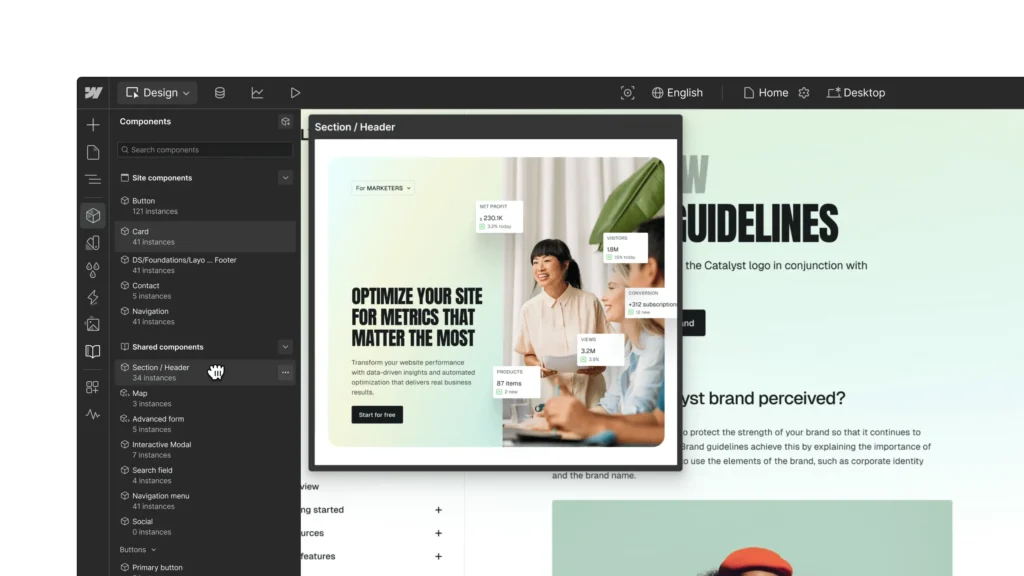
Webflow is gaining popularity in Singapore because it offers a modern visual design experience and extremely clean front-end output — making it ideal for companies that value branding, design precision, and micro-interactions.
Most Suitable For
- Premium brands
- Design-focused companies
- SMEs wanting a more polished, modern interface
- Agencies, creative studios, and tech startups
- Businesses prioritising fast loading and clean structure
Pros
✔ Exceptional visual design control – Pixel-perfect animations & interactions.
✔ Clean, semantic HTML/CSS – Faster and more SEO-friendly than many builders.
✔ Faster performance than WordPress (lighter codebase).
✔ Built-in CMS – More stable and easier to maintain compared to plugins.
✔ No plugins needed – Reduces security risks and maintenance issues.
Cons
✘ Higher subscription costs – CMS hosting $23–$39/month.
✘ Fewer developers in Singapore – Higher development fees.
✘ Not ideal for large-scale e-commerce (unless using Webflow + Shopify hybrid).
✘ Limitations on fully custom backend features.
Typical Cost Range in Singapore
$3,000 – $15,000
Cost depends on:
- Custom animation work
- Advanced CMS structure
- Number of landing pages
- Integration needs
- Custom-coded components (React, scripts, etc.)
Long-Term Considerations
- Hosting/subscription cost: $23–$49/month
- Lower maintenance than WordPress
- Ideal for branding-focused companies
5.4 Custom Development (Laravel / React / Node.js / Vue / Next.js)
Custom development is the best option for companies that need full control, high scalability, enterprise security, or proprietary systems. This is common among medium to large enterprises in Singapore.
Most Suitable For
- SaaS platforms
- Portals & dashboards
- Enterprise workflow automation
- Large-scale e-commerce
- Government or corporate systems
- Multi-level membership systems
- Complex booking or scheduling systems
- Custom ERP or HR systems
Pros
✔ 100% customised – No limitations from templates or plugins.
✔ Highly secure – Enterprise-grade security and API control.
✔ Future-proof and scalable – Easily expand functions over time.
✔ Faster backend performance – Custom code is more efficient.
✔ Ideal for automation – Can integrate with existing workflows (CRM, ERP, HRMS).
Cons
✘ Most expensive option – Requires senior developers.
✘ Longer development timeline – 3–12+ months depending on scope.
✘ Requires technical maintenance – Higher monthly upkeep.
✘ Not suitable for simple websites – Overkill for basic projects.
Typical Cost Range in Singapore
From $20,000 – $200,000+
Factors affecting cost:
- Number of user roles
- Dashboard & reporting complexity
- API integrations
- Payment/membership systems
- Required security compliance (PDPA, ISO standards)
- Mobile app integration
- Cloud hosting setup (AWS, GCP, Azure)
- Data migration from legacy systems
Long-Term Considerations
- Maintenance cost: $1,000 – $10,000/month depending on SLA
- Hosting cost: $100–$2,000/month (cloud servers)
- Best choice for businesses planning long-term digitalisation
See More: Website Design Singapore: How to Build a Stunning Website That Converts
6. Breakdown by Features: How Each Feature Adds Cost (Full Detailed Guide)
Every feature you add to a website directly affects the final price of Web Development Singapore projects. Why?
Because each feature increases:
- Design complexity
- Development hours
- Server load & hosting requirements
- Testing time
- Maintenance needs
Below is a comprehensive breakdown of the most common features requested by Singapore businesses — how they work, why they add cost, and what price range you can expect.
6.1 Custom UI/UX Design
Estimated Cost: $1,000 – $10,000
Custom UI/UX design is one of the biggest contributors to web development cost because it involves:
- User research & persona creation
- Wireframes & layout planning
- Style guides
- High-fidelity mockups
- Mobile responsive design
- UX flows & micro-interactions
Why It Adds Cost
- Requires a designer (higher expertise)
- More revisions and prototyping
- Tailored experience instead of using templates
Best For
Brands that want a premium, high-performing, visually polished website.
6.2 Booking / Reservation System
Estimated Cost: $1,000 – $8,000
Booking systems vary widely depending on complexity. Examples include:
- Restaurant reservations
- Clinic appointment scheduling
- Fitness class bookings
- Equipment rental
- Hotel room bookings
Why It Adds Cost
- Requires backend logic (availability, time slots, rules)
- Email/SMS notification setup
- Calendar integration (Google, Outlook)
- Payment integration (if required)
- User login system (optional)
Advanced Features That Increase Cost
- Automated reminders
- Staff-side management panel
- Multi-branch scheduling
- Resource allocation logic
See More: Looking for Cheap Web Design in Singapore? Here Is What You Need to Know
6.3 Shopping Cart + Payment Gateway (E-Commerce)
Estimated Cost: $2,000 – $15,000
E-commerce functionality includes:
- Product catalogue
- Payment integration (PayNow, PayPal, Stripe, GrabPay)
- Inventory management
- Cart & checkout system
- Order confirmation emails
- Promo codes and loyalty points
Why It Adds Cost
- Requires secure development (PCI compliance)
- Multiple systems must connect
- Testing is more complex
- Integrations with courier, accounting, or inventory systems
Additional Cost Factors
- Number of product categories
- Custom checkout design
- Subscription-based billing
- Multi-currency support
6.4 Membership Portal
Estimated Cost: $3,500 – $20,000
Membership systems include:
- User logins
- Subscription tiers
- Paywalls
- Member-only content
- User dashboards
- Points & rewards
Why It Adds Cost
- Requires database design
- Security setup (password hashing, encryption)
- Multiple user types and access permissions
- Recurring billing logic (Stripe, Braintree)
Advanced Features That Increase Cost
- GST integration
- Automated member renewal
- Custom analytics dashboards
6.5 Multi-language Support
Estimated Cost: $500 – $5,000
A multilingual website is common in Singapore due to diverse audiences.
What It Involves
- Creating translated page versions
- Language switcher setup
- URL structure optimization (e.g., /en, /zh, /ms)
- Multilingual SEO
Why It Adds Cost
- Every page requires duplication
- Translations need management
- SEO setup for each language
Factors Affecting Price
- Number of languages
- Manual translation vs machine translation
- CMS configuration
6.6 CRM Integration (HubSpot, Salesforce, Zoho)
Estimated Cost: $1,500 – $10,000
CRM integration is essential for companies that want to centralize leads and automate sales processes.
Examples of Integrations
- Contact form → CRM
- Booking system → CRM
- E-commerce orders → CRM
- Email automation setups
- Lead scoring
Why It Adds Cost
- Requires API connections
- Data mapping & workflow planning
- Testing for accuracy
- Security compliance (PDPA in Singapore)
6.7 Chatbot Setup (AI or Rule-Based)
Estimated Cost: $300 – $3,000
Chatbots include simple button-based bots or advanced AI-powered bots.
Types of Chatbots
- Messenger/WhatsApp bots
- On-site live chat bots
- AI customer service bots (ChatGPT API, Dialogflow)
Why It Adds Cost
- Custom scripts
- API integration
- Multi-language configuration
- Training the bot on FAQs
Advanced Add-Ons
- CRM integration
- Ecommerce support
- Appointment scheduling
6.8 Advanced SEO Setup
Estimated Cost: $500 – $3,000
This includes:
- Technical SEO
- Schema markup
- Page speed improvements
- SEO-friendly URL structure
- Keyword setup
- Sitemap + robots.txt
- Meta titles/descriptions
- Internal linking structure
Why It Adds Cost
SEO requires expertise and manual work — not just installing plugins.
6.9 Speed Optimization
Estimated Cost: $300 – $2,000
Slow websites convert poorly. Speed optimization involves:
- Image compression
- Lazy loading
- Code minification
- Server optimization
- Caching setup
- CDN (Cloudflare) configuration
Why It Adds Cost
It requires testing, performance auditing, and server knowledge.
Summary Table (Enhanced Version)
| Feature | Additional Cost (SGD) | Why It’s Expensive |
| Custom UI/UX Design | $1,000 – $10,000 | Research, prototyping, branding |
| Booking System | $1,000 – $8,000 | Backend logic + automation |
| Shopping Cart + Payments | $2,000 – $15,000 | Secure checkout + integrations |
| Membership Portal | $3,500 – $20,000 | User roles, dashboards, billing |
| Multi-language Support | $500 – $5,000 | Duplicate content + SEO setup |
| CRM Integration | $1,500 – $10,000 | API setup + workflows |
| Chatbot | $300 – $3,000 | AI logic + automation |
| Advanced SEO | $500 – $3,000 | Manual setup + audits |
| Speed Optimization | $300 – $2,000 | Server & code tuning |
See More: How to Submit Your Website to Google, Bing & Cốc Cốc: The Complete 2025 SEO Guide
7. Who Should Build Your Website? Agency vs Freelancer vs In-house
Choosing the right team for your Web Development Singapore project is just as important as choosing the right platform or features. Each option has different strengths, limitations, and cost ranges. Below is a detailed breakdown to help you decide.
7.1 Freelancers (Lowest Cost Option)
Best for:
- Small businesses with simple website needs
- Startups with tight budgets
- Landing pages or small brochure websites
Pros:
- Lowest pricing in the market
- Faster turnaround for small projects
- Direct communication with the developer
Cons:
- Limited skill set (usually only design or coding, not both)
- Quality may vary depending on experience
- Higher risk: no formal process, no long-term accountability
- Delays may occur if freelancer has multiple projects or personal commitments
- Limited after-launch support and maintenance
Typical Price Range: $500 – $3,000
Freelancers are suitable if your project is small and you don’t require advanced features or long-term maintenance. However, they may struggle with large-scale or high-security requirements.
7.2 Singapore Web Development Agencies (Most Reliable & Recommended)
Best for:
- Corporate websites
- E-commerce platforms
- Membership portals
- Companies prioritising long-term results, branding, and SEO
Pros:
- Full professional team (UI/UX, developers, programmers, QA, SEO specialists)
- More structured process (planning, design, development, testing)
- Higher quality assurance
- Clear contracts, transparent timelines, and milestone reporting
- Long-term support, maintenance, and security updates
- Better handling of complex features and integrations
What Agencies Typically Provide:
- UX research and user journey planning
- Custom design (UI/UX)
- Frontend and backend development
- CMS setup and integration
- SEO optimization
- Hosting and security configuration
- Testing and quality assurance
- Continuous support and maintenance
Price Range: $3,000 – $80,000+
Price varies depending on project complexity, size of agency, and deliverables.
Agencies are the best choice for serious businesses that want a professional website built with long-term scalability.
7.3 In-house Web Development Team (For Large Companies)
Best for:
- Enterprises requiring continuous upgrades
- Companies with multiple digital platforms
- Businesses building long-term web applications or SaaS
Pros:
- Full control over development and code
- Immediate support and troubleshooting
- Can develop multiple projects concurrently
- Best for companies needing continuous updates
Cons:
- Very expensive
- Requires ongoing training and management
- Additional HR, software, and infrastructure costs
- Hard to recruit top talent in Singapore
Average Cost: $8,000 – $15,000 per developer per month
(Not including designer, project manager, QA tester, or DevOps.)
This option is suitable only if your company needs development every day, not just once or twice per year.
See More: Web Design Agency Singapore: Services, Costs, Process & How to Choose the Right Partner
8. Timeline for Web Development in Singapore
The development timeline depends on complexity, number of features, and size of the website. Below is a typical range for the Singapore market:
| Website Type | Estimated Timeline |
| Basic Website | 2–4 weeks |
| Corporate Website | 4–10 weeks |
| E-commerce Website | 6–16 weeks |
| Custom Web Application | 3–12 months |
Why Some Projects Take Longer
- More features require more planning, design, and testing
- Custom coding requires backend development time
- Integrations (CRM, booking, payments) add complexity
- Larger websites require more content and approvals
- Revisions or late content submission delays progress
Rush Project Fees
If you want your website completed faster than the standard timeline, many agencies add rush fees because they must allocate more resources or work overtime.
See More: 7 Tips to Hire a Reliable Website Developer in Singapore
9. Hidden Costs You Should Know in Singapore
Many businesses underestimate the long-term costs of owning a website. While building the site is a one-time investment, maintaining it is ongoing.
Below are the common hidden or forgotten expenses:
Hosting (S$100 – S$500/year)
Hosting affects website speed, uptime, and security.
Options include shared hosting, VPS hosting, cloud hosting, or managed hosting.
Domain Name (S$20 – S$60/year)
Your domain needs to be renewed every year. Premium names cost more.
Website Maintenance (S$80 – S$300/month)
Includes:
- Plugin updates
- Bug fixes
- Security patches
- Backup management
- Performance monitoring
- Content updates (optional)
Plugin or Software Licenses (S$100 – S$800/year)
Premium plugins for SEO, security, e-commerce, or booking systems require annual renewals.
Security Tools (S$100 – S$500/year)
Security add-ons like firewalls, malware scanning, and backup systems help protect your website from attacks.
Other Possible Costs
- Email hosting
- SSL certificates (if premium)
- CDN (Cloudflare)
- Content creation (photography, copywriting)
Understanding these costs allows you to plan your budget realistically and avoid surprises after launch.
See More: Top 20 Web Design Singapore Companies: Complete Guide
10. How to Choose the Right Web Development Provider in Singapore
Selecting the right partner affects your website’s success, performance, and long-term ROI. Here are the key factors to evaluate:
Ask for a Detailed Quotation
A good provider should break down:
- Design
- Development
- Features
- Timeline
- Hosting
- Maintenance
- Additional costs
Avoid providers who give a single unclear lump sum.
Check Their Past Projects
Look for:
- Design quality
- Performance of their website builds
- Mobile responsiveness
- Industry experience
- Client testimonials
Confirm Platform & Technology
Ensure the chosen technology suits your business, such as WordPress, Shopify, Webflow, or custom development.
Clarify Maintenance Fees
Know exactly what is included:
- Updates
- Backups
- Fixes
- Support hours
Evaluate Their SEO Capabilities
Your website must be optimized for ranking, not just designed well.
Check whether they provide:
- Technical SEO
- On-page optimization
- Schema markup
- Fast loading speed
Ensure Clear Project Timeline
The provider should give you a complete development schedule with milestones.
Confirm Ownership of Source Code & Website
Some low-cost providers lock clients in by restricting access to the backend or hosting. Ensure you own everything after the project ends.
Avoid Extremely Cheap Offers
Web development is time-intensive. Prices that are too low indicate low quality, lack of security, or no long-term support.
Final Advice
A website is an investment in brand value, user experience, and long-term business growth. Choosing the right provider ensures your site is stable, scalable, and able to support your marketing strategy.
11. FAQs About Web Development Singapore (8 Detailed Q&A)
These frequently asked questions address the most common concerns businesses in Singapore have when planning a website project. Each answer is expanded to help readers make informed decisions.
1. How much does web development cost in Singapore?
Website development in Singapore generally ranges from $1,500 to $80,000+, depending on the complexity, platform, and type of provider you hire.
Typical cost ranges:
- Basic business website: $1,500 – $5,000
- Corporate website (10–30 pages): $5,000 – $12,000
- E-commerce website: $3,500 – $25,000+
- Custom web applications (CRM, LMS, portals): $30,000 – $200,000+
Why the wide range?
- Number of pages
- Custom design vs templates
- Features required (booking system, payment gateway, CRM)
- Agency vs freelancer pricing
- Amount of SEO and content included
Businesses should request a detailed quotation to understand what is included in the price.
2. How long does it take to build a website in Singapore?
Timelines depend on the project scope and how quickly clients provide content and feedback.
General timeline guide:
- Basic Website: 2–4 weeks
- Corporate Website: 4–10 weeks
- E-commerce Website: 6–16 weeks
- Custom Applications: 3–12 months
Factors that affect timeline:
- Complexity of design
- Number of revisions
- Custom programming (APIs, dashboards, portals)
- Content availability
- Client response time
If you need your website urgently, some agencies offer expedited development for an additional fee.
3. Which platform is best for business websites in Singapore?
The ideal platform depends on your business model, technical needs, and budget.
WordPress
Best for corporate, service, and blog websites.
Advantages: Flexible, affordable, large plugin ecosystem.
Shopify
Best for e-commerce stores selling products online.
Advantages: Secure, reliable, fast setup, optimized for sales.
Webflow
Best for companies prioritizing modern, premium design.
Advantages: Smooth animations, clean CMS, fast loading.
Custom Development (Laravel, React, Node.js)
Best for complex applications or unique business logic.
Advantages: Fully customizable, scalable, high-performance.
Choosing the right platform ensures long-term stability and easier maintenance.
4. Why are Singapore web development prices higher than in other countries?
Singapore website development tends to be pricier because of factors related to the local business environment and labour market:
Higher Labour Costs
Singapore developers, designers, and engineers command competitive salaries due to the high cost of living and skilled job market.
Higher Quality Expectations
Most businesses expect professional, well-tested websites built with strong security, performance, and compliance.
Stricter Security & Compliance Requirements
Many industries require:
- PDPA compliance
- Secure hosting
- Stronger data protection
- Better encryption
Experienced Talent Pool
Singapore has a mature digital market, meaning agencies employ specialized skill sets such as UI/UX designers, backend engineers, and SEO strategists.
You are not just paying for the website—you are paying for expertise, reliability, and long-term stability.
5. Should I choose a freelancer or an agency?
It depends on your goals, budget, and long-term plans.
Choose a freelancer if:
- You have a small project
- Your budget is limited
- You need simple features only
- You are comfortable managing the project yourself
Choose a web agency if:
- You want a professional, high-quality website
- You need branding, UI/UX, development, and SEO together
- Your website requires multiple content sections or features
- You want long-term support, maintenance, and accountability
- You need secure, scalable, enterprise-level solutions
For most businesses, especially SMEs and corporates, an agency provides significantly more value, structure, and reliability.
6. Does the website include SEO?
Most Singapore agencies include basic on-page SEO, but this is not the same as a full SEO campaign.
Basic SEO usually includes:
- Proper URL structure
- Page titles and meta descriptions
- Header tags
- Image alt texts
- Mobile responsiveness
- Basic page speed optimization
- XML sitemap submission
Advanced SEO is a separate service and normally includes:
- Keyword research
- Content strategy
- Competitor analysis
- Backlink building
- Technical SEO audits
- Monthly reporting
- Conversion optimization
If your goal is to rank on Google, you’ll need continuous SEO after the website launches.
See More: Web Design vs. Web Development: What’s the Difference?
7. Do I need website maintenance?
Yes. Websites require regular updates and monitoring to stay secure and functional.
Without maintenance, your website risks:
- Security vulnerabilities
- Outdated plugins or CMS
- Broken forms or pages
- Slow loading speed
- Errors after hosting or plugin updates
- Poor performance on mobile
Typical maintenance tasks:
- Security patches
- Bug fixes
- Backup management
- Plugin updates
- Performance optimization
- Uptime monitoring
- Content updates (optional)
Most businesses in Singapore sign a monthly or annual maintenance package to ensure their website remains stable long-term.
8. How do I reduce web development costs?
Here are practical ways to lower your website budget without compromising essential quality:
Use a Pre-made Template
Templates reduce design cost and speed up development.
Start with Essential Features Only
Launch a “Phase 1” version and add advanced features later.
Choose WordPress or Shopify Instead of Full Custom Development
These platforms reduce coding time and minimize backend costs.
Prepare Your Own Content
Agencies often charge extra for copywriting, photography, or videos.
Avoid Unnecessary Integrations
Only use tools that directly support your business operations.
Communicate Clearly and Provide Prompt Feedback
Delays due to unclear requirements can increase project hours and therefore cost.
These optimizations can reduce your total cost while ensuring your website remains scalable for future upgrades.