
Artificial intelligence is reshaping how people search for information. Instead of scrolling through traditional search engine results pages, users now ask AI platforms direct questions and receive summarised answers in seconds.
Platforms like OpenAI’s ChatGPT, Google’s Gemini, Microsoft’s Copilot, and Perplexity AI are becoming alternative search engines. In many industries, buyers now ask AI tools for recommendations before they ever click a website.
That raises a critical question:
Does your brand appear in AI-generated answers?
Before you optimise anything for AI search visibility, you need a baseline. You must understand where you stand today. This guide walks you through three practical tests you can run in minutes — plus advanced strategies to track and grow your AI visibility over time.
See More: Website Design Cost in Singapore: Complete Pricing Guide
Why AI Search Visibility Matters in 2026
Traditional SEO focuses on ranking in search engines like Google and Bing. But AI-powered platforms are changing how discovery works.
Here’s what’s different:
- AI platforms summarise answers.
- They cite selected sources.
- They recommend brands directly.
- They reduce the need to click multiple websites.
If your competitor is mentioned in an AI answer and you are not, they gain:
- Higher authority perception
- Increased trust
- More referral traffic
- Better brand recall
AI visibility is becoming a new layer of search optimisation. It does not replace traditional SEO — it builds on top of it.
Understanding How AI Platforms Choose Brands
Before running the tests, it helps to understand how AI platforms generate answers.
AI systems typically:
- Analyse training data (public web content, licensed data, structured knowledge).
- Retrieve real-time information (depending on platform capabilities).
- Select high-authority or frequently cited sources.
- Summarise and synthesise content.
- Provide citations or reference links.
They do not rank websites the same way traditional search engines do. Instead, they choose what they “trust” based on:
- Authority signals
- Structured data
- Content clarity
- Brand mentions
- External references
- Repetition across credible sources
This makes brand authority and digital footprint more important than ever.
See More: Top 12 Web Design Companies in Singapore (2026 Guide)
Quick Test 1: Search for Yourself in AI Platforms
This is the fastest way to measure baseline visibility.
Step 1: Open AI Platforms
Open:
- ChatGPT
- Gemini
- Copilot
- Perplexity AI
- Or traditional search like Google
Step 2: Type an Industry Query
Search:
“Best [what you do]”
Examples:
- Best meal delivery in Sydney
- Best property management software in the UK
- Best web design agency in Singapore
- Best accounting firm for startups
Step 3: Analyse Two Key Things
1. Does your brand appear in the response?
If not, your visibility gap is immediate and measurable.
2. What sources are being cited?
AI platforms frequently show links or references.
Click them.
These pages represent what the AI considers trustworthy.
Why Citations Matter
AI platforms often generate answers based on:
- Industry directories
- Comparison articles
- Review platforms
- News mentions
- High-authority blogs
- Government or institutional pages
If your competitors appear and you do not, investigate:
- Are they listed on high-authority directories?
- Do they have comparison-style blog content?
- Are they mentioned in media publications?
- Do they have strong review profiles?
This is not just about ranking — it’s about being referenced.
What This Test Reveals
This simple test helps you identify:
- Whether your brand is visible
- Which competitors are dominating
- Which content types AI prefers
- Which domains are frequently cited
- Whether review platforms influence results
You’ve now identified your AI visibility gap.
See More: Top 12 Web Design Companies in Singapore (2026 Guide)
Quick Test 2: Check GA4 for AI-Referred Traffic
You might already be receiving AI traffic without realising it.
Users frequently click citations from:
- ChatGPT
- Perplexity AI
- Gemini
- Copilot
To check this, use Google Analytics 4.
Step-by-Step: Identify AI LLM Referral Traffic
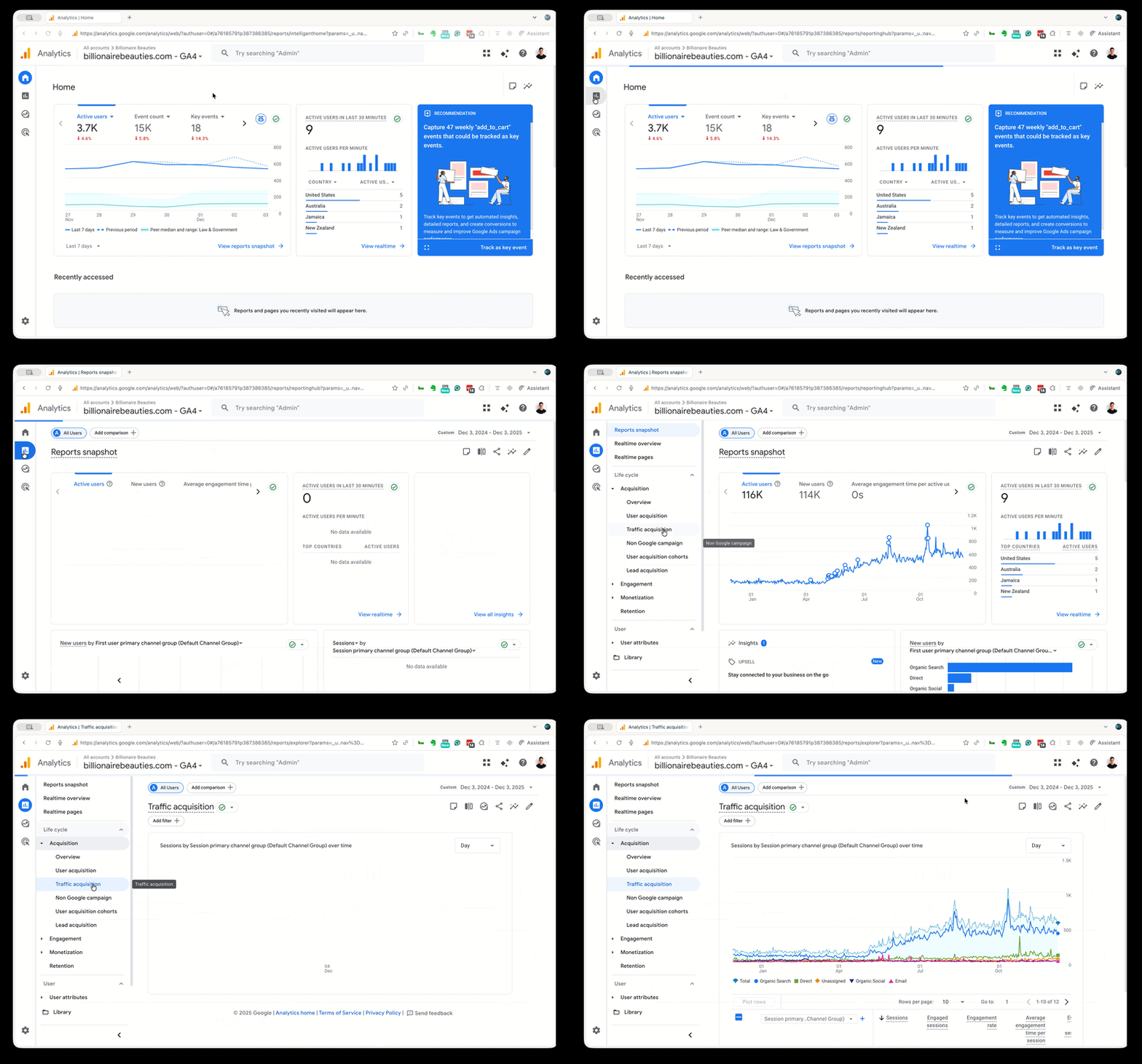
1. Open GA4
Go to:
Reports → Acquisition → Traffic Acquisition
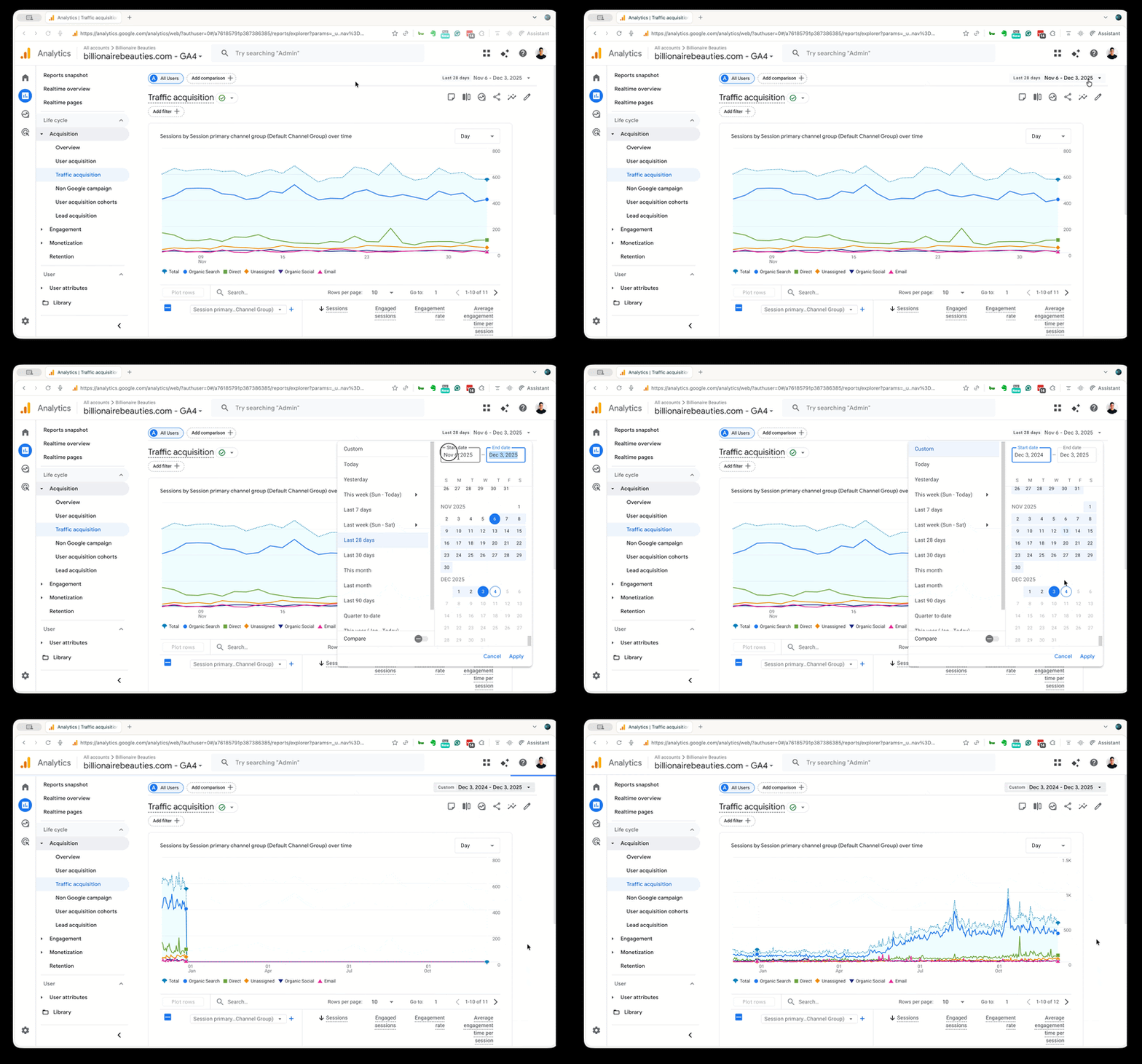
2. Set Date Range
Set your date range to the last 12 months.
This gives you trend data instead of a short-term snapshot.
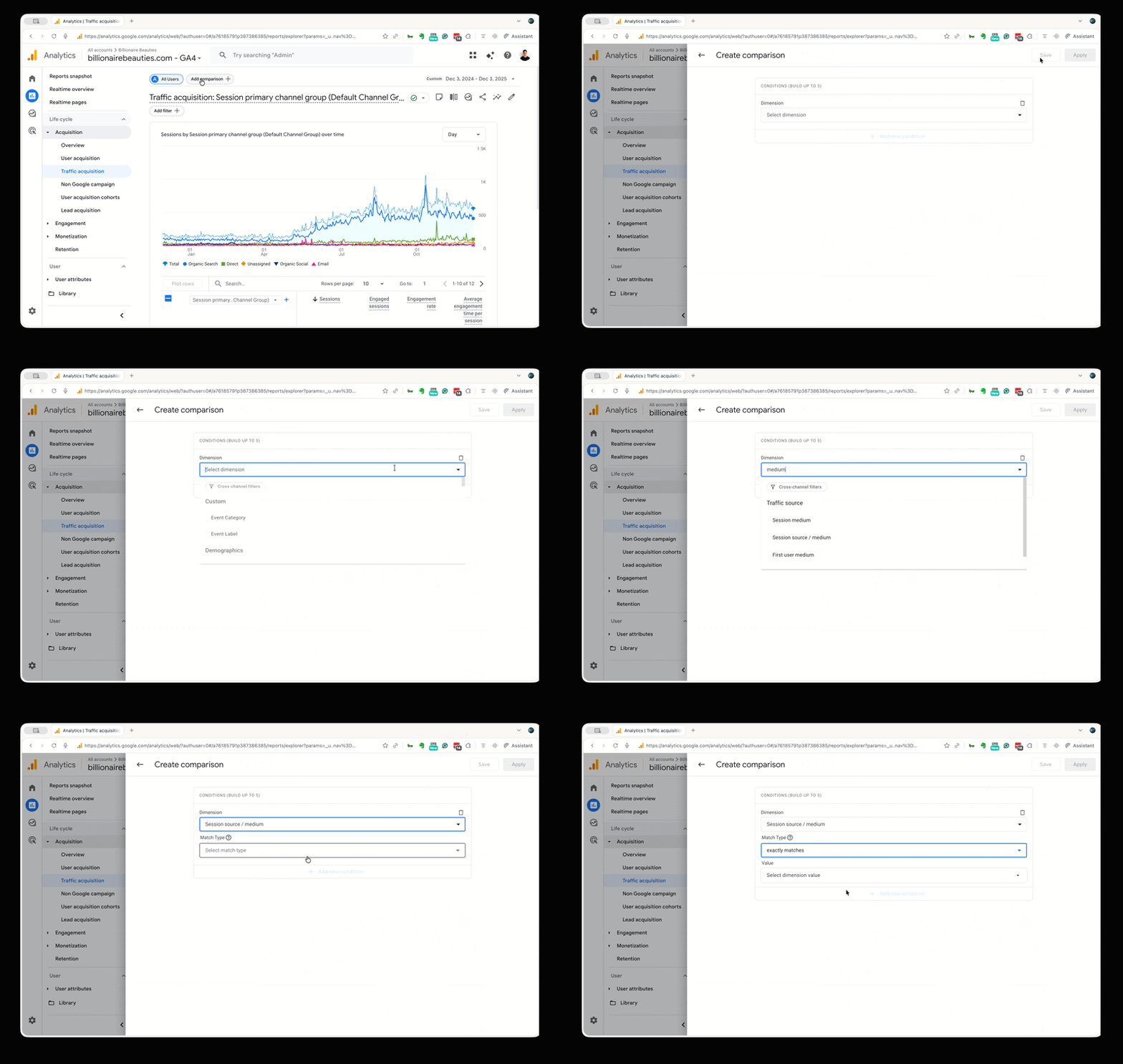
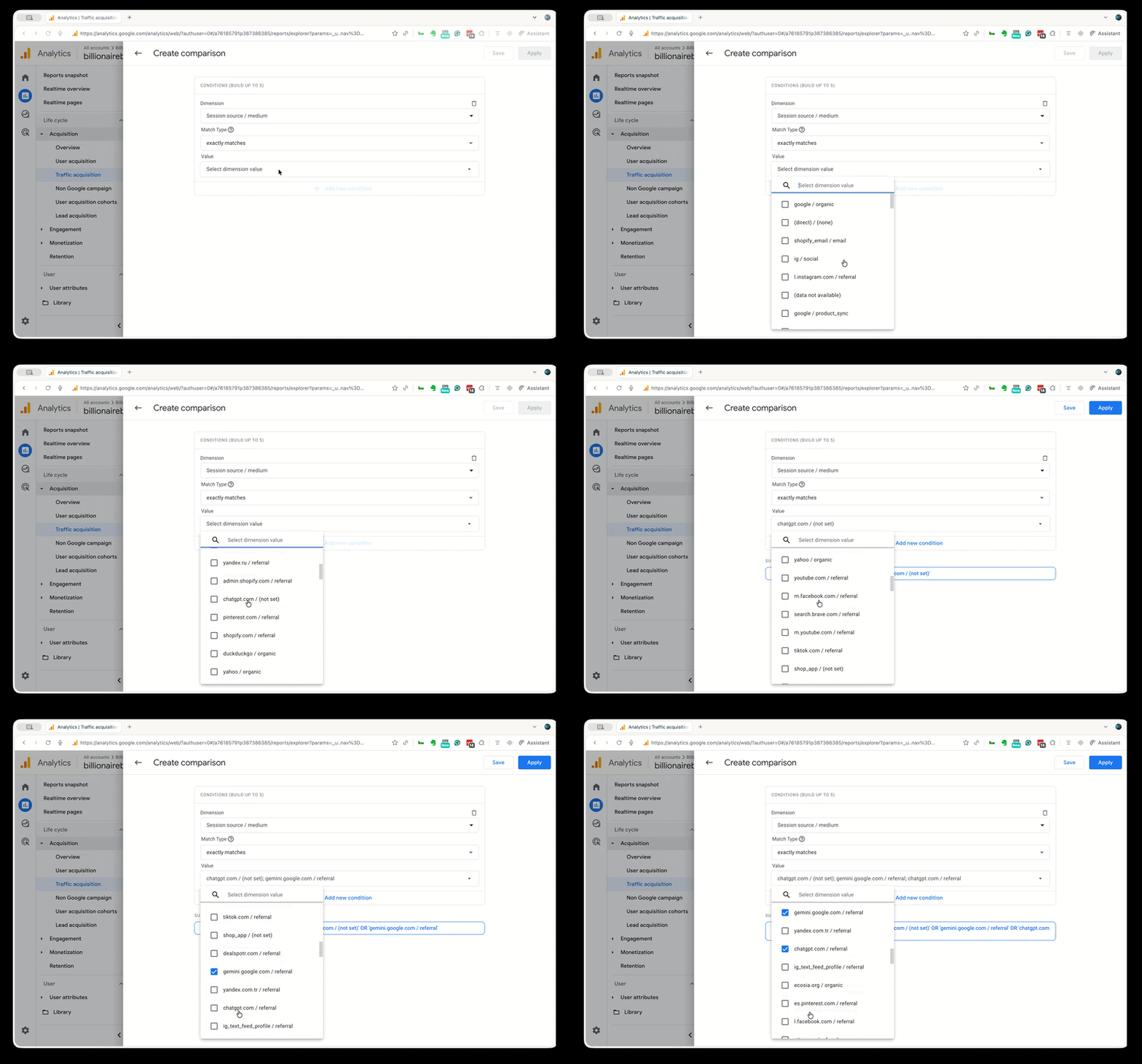
3. Add Comparison Filter
Click:
Add Comparison → Create New
Choose:
Dimension → Session source / medium
Match Type → Exactly matches
See More: How to Check Website Credibility Using Quick Online Tools
4. Select AI Referrer Domains
Add known AI referrers such as:
- chatgpt.com
- perplexity.ai
- claude.ai
- gemini.google.com
- copilot.microsoft.com
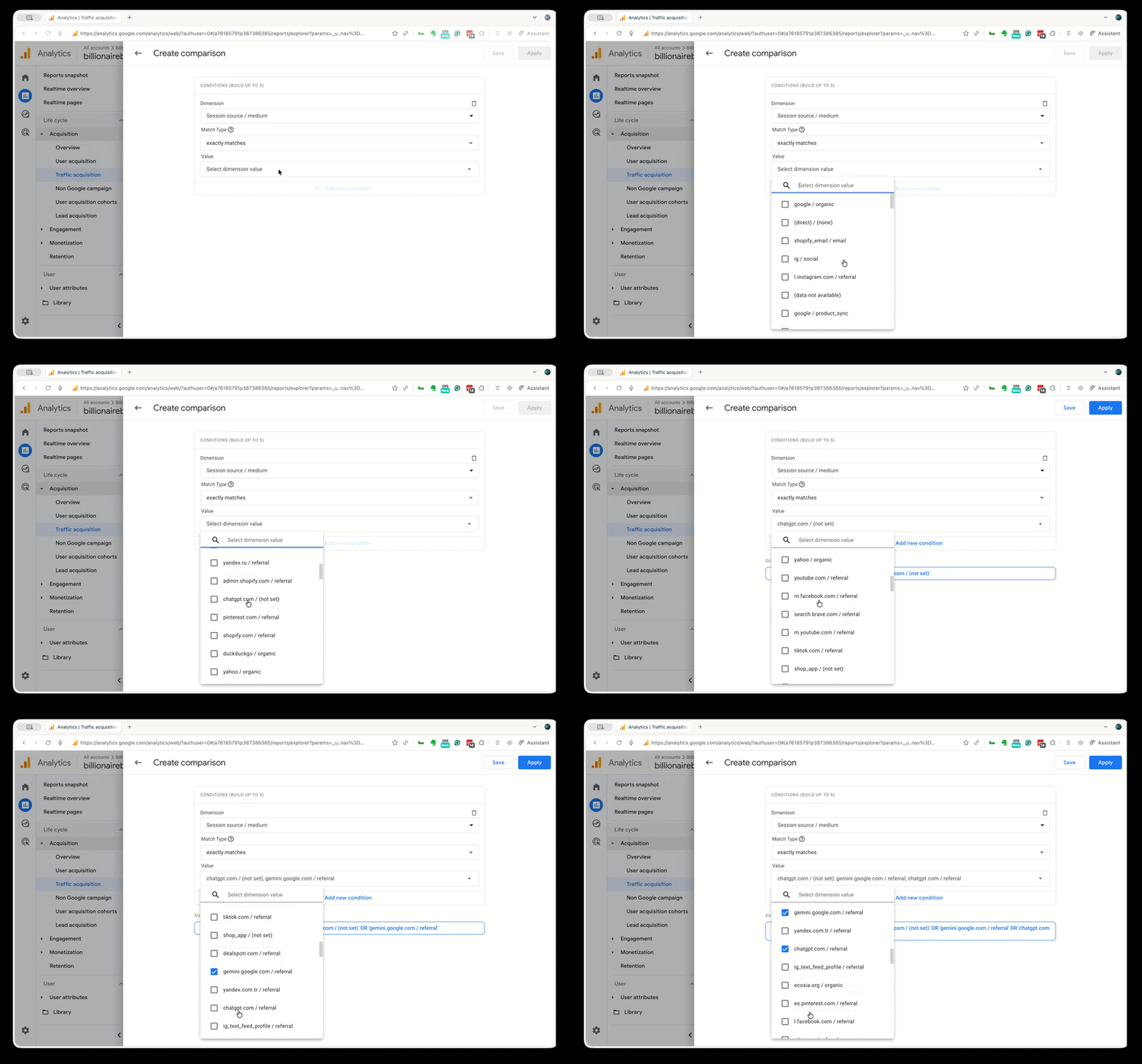
Save the comparison and name it: Click Save → name the comparison “AI LLM” → enter the description “Referral sessions received from AI LLMs” → Confirm
What This Shows You
You can now see:
- Total sessions from AI platforms
- Engagement rate
- Conversions
- Revenue (if eCommerce tracked)
- Growth trends over time
This is powerful.
You may discover:
- AI traffic converts better than organic
- AI users stay longer
- AI traffic is growing quarter-on-quarter
Or you may discover:
- You have almost no AI referral traffic
Both outcomes provide strategic clarity.
See More: 10 Best Website Development Companies in Singapore (2026 Ranking)
Pro Tip: Review Every 90 Days
AI platforms evolve quickly. New tools launch regularly. Referrer domains change.
Set a quarterly reminder to:
- Update referrer filters
- Add new AI domains
- Review performance
- Compare quarter-over-quarter growth
This ensures your tracking remains accurate.
Quick Test 3: Use an AI Citation Tracker (Advanced)
If you want deeper visibility tracking, third-party tools can help.
One of the most developed tools currently available is Ahrefs and its feature called Brand Radar.
What Makes Brand Radar Different?
After testing most AI citation tools, Brand Radar stands out for offering:
- AI citations globally and by country
- Month-on-month citation tracking
- Detection of prompts you didn’t manually enter
- Trend visibility over time
It attempts to measure how often your brand appears in AI responses.
The Important Caveat
There is no official “AI Search Console.”
No AI platform currently offers:
- Native visibility dashboards
- Official impression counts
- Query-level reporting
- Direct citation analytics
Tools like Brand Radar use large prompt databases (reportedly 244 million monthly prompts) to simulate visibility tracking.
That is still only a fraction of billions of daily AI queries.
So treat these tools as directional indicators, not exact measurements.
Why There Is No “AI Search Console” Yet
Search engines like Google provide Search Console because they operate structured ranking systems.
AI platforms generate responses dynamically. They:
- Don’t have traditional SERPs
- Don’t display fixed ranking positions
- Generate contextual answers
This makes visibility measurement more complex.
But the absence of perfect measurement should not prevent action.
See More: 10 Best Website Development Companies in Singapore (2026 Ranking)
What To Do If You Don’t Appear in AI Answers
If your brand does not appear, here are strategic actions to consider:
1. Strengthen Topical Authority
Create in-depth content around your core expertise:
- Comparison guides
- “Best of” style content
- Industry reports
- Case studies
- Data-driven research
AI models favour comprehensive sources.
2. Improve Structured Content
Use:
- Clear headings
- Bullet points
- FAQ sections
- Schema markup
- Author bios
- Trust signals
Structured content is easier for AI to interpret and summarise.
3. Increase Brand Mentions
AI systems detect brand authority through repetition across trusted domains.
Focus on:
- Guest posts
- PR mentions
- Podcast features
- Industry listings
- Partnerships
The more authoritative sites mention you, the stronger your AI visibility potential.
4. Optimise for Entity Recognition
AI models interpret brands as entities.
Strengthen your entity footprint by ensuring:
- Consistent brand name usage
- Wikipedia-style brand descriptions
- Clear About page
- LinkedIn company presence
- Knowledge panel optimisation
Entity clarity increases recognition.
5. Build High-Quality Reviews
AI platforms often rely on:
- Review platforms
- Third-party directories
- Comparison sites
Ensure your brand appears on relevant review sites in your industry.
See More: 10+ Most Important Google Algorithms
AI Visibility vs Traditional SEO: What’s the Difference?
| Traditional SEO | AI Search Visibility |
| Focuses on ranking positions | Focuses on citations |
| Keyword optimisation | Entity authority |
| Backlinks | Brand mentions |
| SERP CTR | AI answer inclusion |
| Search Console data | No official tracking |
Both matter. One does not replace the other.
AI visibility builds on strong SEO foundations.
Measuring AI Visibility Growth Over Time
To track progress:
- Run monthly AI search tests.
- Monitor GA4 referral data.
- Use citation tracking tools.
- Track brand mention growth.
- Compare competitor presence.
Create a simple quarterly dashboard that includes:
- AI referral sessions
- Citation frequency
- Top prompts where you appear
- Competitor comparison
This gives leadership measurable insight.
The Future of AI Search Optimisation
AI search optimisation is still early-stage.
We can expect:
- More AI-native search experiences
- Higher citation transparency
- Brand visibility dashboards
- Integrated analytics systems
- Structured content requirements
Businesses that measure and adapt early will gain competitive advantage.
How is AI search different from Google search?
AI search, like Perplexity or ChatGPT Search, synthesizes information into direct, conversational answers with citations, while Google Search primarily delivers ranked links and snippets for users to explore.
Core Technology
AI search relies on large language models (LLMs) for semantic understanding and intent interpretation beyond keywords. Google uses algorithms for crawling, indexing, and ranking vast web content in real-time.
Response Format
AI tools provide synthesized paragraphs or answers from multiple sources, often with inline citations. Google offers lists of links, images, videos, and AI Overviews for summaries, but requires clicking through.
Key Differences
| Aspect | AI Search (e.g., Perplexity) | Google Search |
| Query Handling | Natural language, conversational context | Keyword-based, limited multi-turn |
| Personalization | Session-based memory and predictions | User history and data |
| Ads/Distractions | Minimal or none | Heavy presence |
| Strengths | Research, synthesis, citations | Breadth, real-time, media integration |
AI search excels for complex queries by reducing navigation time, though Google dominates everyday and local searches.
See More: How to Get Your Content to Appear in Google’s AI Overview
How do I know if AI traffic converts?
AI traffic from sources like Perplexity or ChatGPT often converts at higher rates—up to 5x better than Google organic—due to higher intent, but you must track it properly to confirm.
Setup Tracking
Implement UTM parameters on links you promote for AI visibility, or filter referrers in Google Analytics 4 (GA4) using regex for domains like perplexity.ai, chatgpt.com, claude.ai. Create custom channels or explorations in GA4 to segment AI traffic separately from direct or organic.
Key Metrics
Monitor conversion rate (e.g., purchases, sign-ups), revenue per visit, session depth (pages viewed, time on site), and lifetime value of AI-sourced customers. Compare against benchmarks: AI traffic shows 12-16% conversion vs. Google’s 2-6%, with 3-4x longer sessions.
Analysis Steps
- Filter GA4 reports for AI referrers and drill into engaged sessions, bounce rate, and conversions.
- Use data-driven attribution to credit assisted conversions from AI journeys.
- Test with A/B content optimized for AI (e.g., structured data) and track ROI quarterly.
Tools like Looker Studio dashboards help visualize trends across AI engines.
Are AI citation tracking tools accurate?
AI citation tracking tools provide useful insights into visibility on platforms like Perplexity or ChatGPT, but their accuracy is limited by AI personalization, probabilistic responses, and incomplete coverage—not 100% reliable.
Accuracy Levels
Tools like Trackerly or Relixir achieve strong results through user simulation, but still face 5-10% inaccuracies from model variations and personalization biases. Perplexity citations themselves are more reliable than competitors (lowest error rate), yet tracking tools struggle with scale and real-time changes.
Limitations
Responses vary by user location, history, and phrasing, making single checks unreliable—tools often miss geographic biases or need multiple samples. Manual methods lack scale, while automated ones over-rely on APIs without full context.
Best Practices
Combine tools with incognito testing across queries and regions for averages, and cross-verify with competitors for share of voice. Monitor frequently, as AI updates shift citations rapidly.
Will AI search replace traditional SEO?
AI search won’t fully replace traditional SEO, but it’s transforming it into a hybrid model where visibility in AI answers becomes as crucial as page rankings. Traditional SEO focuses on clicks and links, while AI prioritizes citations and intent synthesis.
Evolving Landscape
AI search engines like Perplexity reduce zero-click searches by summarizing answers directly, shifting focus from traffic volume to brand exposure in responses. Gartner predicts a 25% drop in traditional search traffic by 2026, yet core SEO foundations like authority and technical optimization remain vital.
Key Comparison
| Aspect | Traditional SEO | AI-Optimized SEO (GEO) |
| Goal | Rankings and clicks | Citations and summaries |
| Speed | 6-12 months | 4-6 months with automation |
| Strengths | Proven sustainability | Intent prediction, scalability |
| Weaknesses | Manual, slow adaptation | Risks generic content |
Brands thrive by blending both: use traditional for site health and AI tools for conversational content that earns placements in overviews.