
In Singapore’s vibrant and competitive culinary landscape, a restaurant’s digital presence is no longer a luxury but a fundamental necessity for survival and growth. From hawker stalls embracing online ordering to Michelin-starred establishments curating immersive digital experiences, the Food & Beverage (F&B) sector is undergoing a profound digital transformation. The days of relying solely on foot traffic and word-of-mouth are waning; today’s diners, especially in a tech-savvy city-state like Singapore, expect to discover, evaluate, and engage with restaurants online long before they ever step through the door. The pain point for many F&B owners is understanding how to translate their culinary excellence into an equally compelling online experience that not only attracts but converts digital browsers into loyal patrons filling their tables.
This ultimate guide will demystify the art and science of Web Design for F&B businesses in Singapore. We’ll explore why a strategic website is critical for your F&B brand, delve into the essential features that drive engagement and conversions, and provide a step-by-step roadmap to building a digital platform that truly amplifies your restaurant’s unique appeal. You’ll learn how to leverage design, technology, and marketing principles to create a website that not only showcases your delicious offerings but also streamlines operations and, ultimately, fills your tables.
Why is a Strong Online Presence Critical for F&B Businesses in Singapore?
Singapore’s F&B industry is notoriously dynamic, with new establishments emerging constantly and consumer tastes evolving rapidly. In this intensely competitive environment, an online presence isn’t just about having a website; it’s about building a digital ecosystem that actively engages potential customers, drives reservations, facilitates orders, and reinforces your brand identity. Without a robust digital footprint, restaurants risk becoming invisible to a significant portion of their target market.
Shifting Consumer Habits: The Digital-First Diner
Modern diners in Singapore, spanning all age groups, increasingly rely on digital channels for their F&B choices. A 2023 study indicated that over 80% of consumers research restaurants online before dining out, with a significant portion (around 65%) making reservations or placing orders directly through a restaurant’s website or an aggregator platform. This trend is amplified by Singapore’s high smartphone penetration rate, which stands at approximately 90% as of 2024. People are constantly on their phones, searching for “restaurants near me,” “best cafes in Orchard,” or “Italian food delivery.” If your restaurant doesn’t appear in these searches with an engaging and functional website, you’re missing out on a vast pool of potential customers.
Beyond a Digital Business Card: Driving Reservations and Orders
Historically, a restaurant website might have served as little more than an online brochure. Today, it’s a powerful transactional hub. A well-executed F&B website acts as a 24/7 salesperson and receptionist, capable of:
- Accepting Reservations: Integrating a seamless online booking system allows customers to secure tables at their convenience, reducing reliance on phone calls and staff workload. Data shows that restaurants with online booking systems see an average increase of 20-30% in reservations.
- Facilitating Online Orders: Whether for takeaway or delivery, an integrated ordering system can significantly boost revenue. During the pandemic, many F&B businesses pivoted to online delivery, with some reporting up to a 500% increase in digital orders, highlighting the enduring importance of this channel.
- Showcasing Your Brand: A website offers unparalleled control over your brand narrative. Through high-quality photography, compelling Copywriting, and thoughtful design, you can convey your restaurant’s ambiance, culinary philosophy, and unique selling propositions in a way that social media platforms or third-party aggregators cannot fully replicate. This is where iCreationsLAB excels in helping businesses craft their digital identity.
The “Instagrammable” Factor Extends Beyond Physical Decor to Digital Aesthetics
An original insight for F&B businesses in Singapore is to recognize that the “Instagrammable” factor, so crucial for physical restaurant spaces, now extends profoundly to digital aesthetics. A stunning website isn’t just a marketing tool; it’s the first “dish” a potential customer tastes online. Just as a beautifully plated dish entices diners, a visually captivating, user-friendly website creates an immediate positive impression, influencing their decision to visit. This digital aesthetic sets the stage for the physical experience, building anticipation and trust. A website that is slow, clunky, or poorly designed communicates a lack of attention to detail that can deter even the most interested patrons, regardless of how good the food might be.
The digital landscape in Singapore is fiercely competitive. Standing out requires more than just great food; it demands a strategic, aesthetically pleasing, and highly functional online presence that resonates with the digital-first habits of modern diners. Investing in professional Website Design for your F&B establishment is an investment in its future success and sustainability.
👉 What Is a Website? How Does a Website Work?
What are the Essential Elements of an Effective F&B Website?
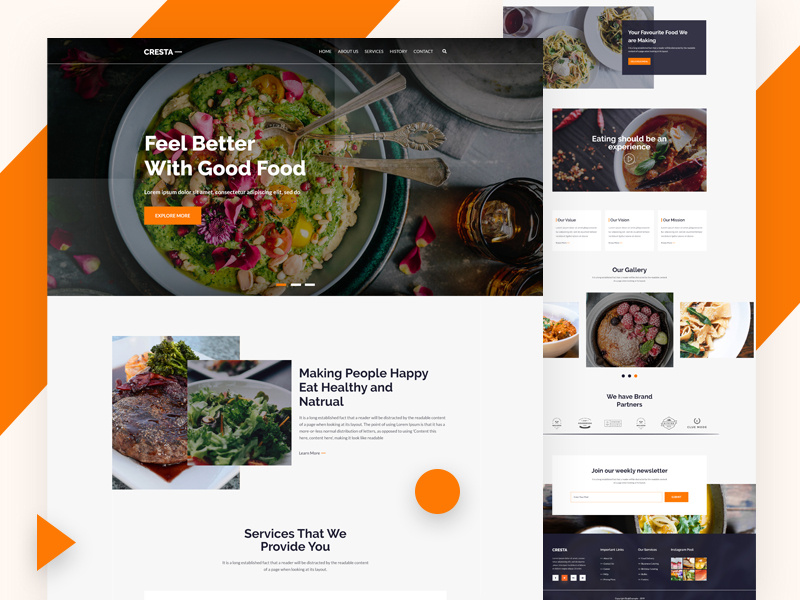
To build a website that truly fills tables, you need to incorporate specific features and design principles tailored to the unique needs of the F&B industry. These elements collectively contribute to a seamless user experience, strong brand representation, and operational efficiency.
1. Visually Appealing Design & Branding
The aesthetics of your website should mirror the ambiance and culinary style of your restaurant. A fine-dining establishment would require a sophisticated, minimalist design, while a casual cafe might opt for a vibrant, playful interface. Consistency in branding – including colors, fonts, and tone of voice – across your website, social media, and physical location is paramount. This builds brand recognition and trust. Professional Graphic Design is key here.
2. High-Quality Photography & Videography
This is arguably the most critical element for any F&B website. Mouth-watering, high-resolution images of your dishes, interior, and even your chefs at work can dramatically influence a customer’s decision. According to industry reports, websites featuring professional food photography see engagement rates up to 40% higher than those with amateur shots. Consider also incorporating short, engaging videos that capture the dining experience. Investing in professional Photography & Videography is non-negotiable.
3. Clear Menu Presentation
Your menu should be easily accessible, legible, and enticing.
- High-quality images: Each dish should ideally have its own appealing photo.
- Detailed descriptions: Go beyond ingredients; evoke the taste, origin, and culinary story.
- Pricing: Clearly displayed for transparency.
- Dietary information: Icons or notes for vegetarian, vegan, gluten-free, halal options are increasingly important in Singapore’s diverse population.
- Seasonal menus: Easy to update to reflect fresh offerings.
4. Seamless Online Reservation System
For sit-down restaurants, an intuitive reservation system is a must.
- Real-time availability: Customers can see open slots immediately.
- Instant confirmation: Provides peace of mind.
- Integration with your POS/CRM: Streamlines operations and customer management.
- Flexibility: Allow for special requests, group sizes, and cancellation policies.
5. Food Delivery & Takeaway Integration
With the rise of food delivery services, offering this option directly from your website is vital.
- Direct ordering: Allows you to retain a larger share of revenue compared to third-party platforms.
- Integration with major platforms: Seamless links to GrabFood, Foodpanda, Deliveroo if you use them.
- Clear pickup/delivery instructions: Estimated times, delivery zones.
- Online payment options: Secure and diverse payment gateways. This often involves robust e-Commerce capabilities.
6. Mobile Responsiveness
Given Singapore’s high mobile usage, your website must be perfectly optimized for all devices – smartphones, tablets, and desktops. A non-responsive site leads to poor user experience, high bounce rates, and negatively impacts your Search Engine Optimization (SEO) rankings. Google prioritizes mobile-first indexing, meaning a mobile-friendly site is essential for visibility.
7. Location & Contact Information
Make it incredibly easy for customers to find and contact you.
- Prominent display: Address, phone number, email, and operating hours should be visible on every page, often in the header or footer.
- Interactive map: Google Maps integration allows for one-click directions.
- Public transport information: Especially useful in Singapore.
- Social media links: Connect with your audience on platforms like Instagram and Facebook.
8. Customer Reviews & Testimonials
Social proof is powerful in the F&B industry.
- Display positive reviews: Showcase testimonials from satisfied customers.
- Links to review platforms: Encourage customers to leave reviews on Google, TripAdvisor, or other relevant sites.
- Respond to feedback: Demonstrate that you value customer opinions.
9. Search Engine Optimization (SEO) for Local Visibility
For F&B businesses, local SEO is paramount.
- Keyword optimization: Use terms like “best cafe near [MRT station],” “restaurant in [neighborhood],” “halal food Singapore.”
- Google My Business: Optimize your profile for maximum visibility in local search results and Google Maps.
- Schema markup: Implement structured data for rich snippets (e.g., ratings, menu items, opening hours) to stand out.
- Fast loading speed: Websites that load quickly rank higher and offer a better user experience.
10. Blog or News Section (Optional but Recommended)
A blog can be a powerful tool for engaging your audience and improving SEO.
- Share recipes: Offer glimpses into your culinary expertise.
- Behind-the-scenes stories: Introduce your team, sourcing, or inspiration.
- Event announcements: Promote special dinners, tasting events, or collaborations.
- Industry insights: Position your restaurant as a thought leader.
By carefully integrating these elements, your F&B website will transform from a static online presence into a dynamic platform that attracts, engages, and converts diners, ensuring your tables are consistently full.
👉 Website Design Singapore: How to Build a Stunning Website That Converts
👉 Top Tips for Website Design in Singapore: Boost Your Business Online
How to Plan Your F&B Website Design Project in Singapore: A Step-by-Step Guide
Embarking on a Web Design for F&B project requires careful planning and execution. Following a structured approach ensures that your final website is not only aesthetically pleasing but also highly functional, optimized for conversions, and aligned with your business goals.
1. Define Your Goals and Target Audience
Before any design or development begins, clearly articulate what you want your website to achieve.
- Goals: Are you primarily focused on increasing reservations, boosting online delivery orders, enhancing brand awareness, or showcasing your menu? Specific, measurable, achievable, relevant, and time-bound (SMART) goals are essential. For example, “Increase online reservations by 25% within six months of launch.”
- Target Audience: Who are you trying to attract? Young professionals, families, tourists, foodies, or a specific demographic? Understanding your audience dictates the design style, content tone, and functionality required. A fine-dining restaurant targeting affluent diners will have different needs than a casual eatery appealing to students.
2. Research Competitors and Industry Trends
Analyze what successful F&B websites in Singapore and globally are doing well.
- Competitor Analysis: Identify direct and indirect competitors. What features do their websites have? What’s their user experience like? What are their strengths and weaknesses?
- Industry Trends: Look at current 7 Must-Know Web Design Trends in Singapore for F&B, such as immersive storytelling, advanced personalization, AI chatbots for customer service, and sustainable design elements. This helps you innovate and stand out.
3. Outline Key Features and Functionality
Based on your goals and research, list all the essential features your website will need.
- Must-haves: Online menu, reservation system, contact info, high-quality images.
- Nice-to-haves: Blog, virtual tour, loyalty program integration, event calendar.
- Scalability: Consider future growth. Will your website need to support multiple locations or new services down the line? This impacts the choice between a simple site and a more complex Website Application.
4. Choose the Right Platform
Selecting the right content management system (CMS) or platform is critical for flexibility, ease of management, and scalability.
- WordPress: Highly flexible with a vast ecosystem of plugins (e.g., for reservations, online ordering). Ideal for customizability and SEO control.
- Dedicated F&B Website Builders: Platforms like Squarespace or Wix offer templates and integrated features for restaurants, often simpler to set up but less flexible.
- Custom-Built Solution: Provides ultimate control and tailored functionality, but comes with a higher cost and longer development time. This is often the route for unique requirements or high-volume businesses.
Comparison of F&B Website Platforms
| Feature/Platform | WordPress (with F&B plugins) | Dedicated F&B Website Builder (e.g., Squarespace for Restaurants) | Custom-Built Solution |
|---|---|---|---|
| Initial Cost | Low to Medium | Medium (monthly subscription) | High |
| Flexibility | High | Medium | Very High |
| Scalability | High | Medium | Very High |
| Ease of Use | Medium (learning curve) | High | Low (requires dev team) |
| Integrations | Extensive (plugins, APIs) | Limited to built-in features & select partners | Custom |
| SEO Control | High | Medium | High |
| Maintenance | Requires regular updates | Handled by platform | Requires dedicated support |
| Best For | Most F&B businesses, growth, unique branding | Small cafes, quick launch, limited budget | Unique concepts, large chains, complex operations |
| Verdict | Most Versatile | Quick & Simple | Tailored Excellence |
5. Develop Content Strategy
Content is king, especially for F&B.
- Professional Photography: As mentioned, this is paramount. Invest in high-quality food, interior, and staff photos.
- Compelling Copywriting: Craft engaging descriptions for your dishes, your restaurant’s story, and your mission. Highlight your unique selling points.
- Video Content: Short, dynamic videos of food preparation, ambiance, or customer testimonials.
- Regular Updates: Plan for fresh content, whether it’s seasonal menus, event announcements, or blog posts.
6. Focus on UI/UX Design
User Interface (UI) and User Experience (UX) are crucial for converting visitors into diners.
- Intuitive Navigation: Make it easy for users to find the menu, make a reservation, or order online within a few clicks.
- Engaging Visuals: Beyond photos, consider the overall layout, color scheme, and typography to create an inviting digital space.
- Speed and Performance: A slow website will frustrate users and harm your SEO. Optimize images and code for fast loading times.
- Mobile-First Design: Ensure the experience is flawless on smartphones.
- Accessibility: Design for all users, including those with disabilities, by ensuring readable fonts, sufficient color contrast, and keyboard navigation. Prioritizing UI UX design is a hallmark of professional Web Development services.
7. Implement SEO Best Practices
Ensure your website is discoverable by search engines.
- Keyword Research: Identify relevant local F&B keywords.
- On-Page SEO: Optimize titles, meta descriptions, headings, and content with target keywords.
- Local SEO: Set up and optimize your Google My Business profile.
- Technical SEO: Ensure your site structure is clean, mobile-friendly, and loads quickly.
- Schema Markup: Use structured data to help search engines understand your content better and display rich results (e.g., star ratings, menu items, opening hours).
8. Integrate Essential Tools
Modern F&B websites are hubs of integrated technologies.
- Point-of-Sale (POS) System: Integrate your online ordering and reservation systems with your in-house POS to streamline operations, inventory management, and table assignments.
- Customer Relationship Management (CRM): Track customer preferences, booking history, and feedback to personalize experiences and run targeted marketing campaigns.
- Marketing Automation: Email marketing platforms for newsletters, promotions, and loyalty programs. Consider EDM Design & Campaign services.
- Analytics Tools: Google Analytics to monitor website traffic, user behavior, and conversion rates.
9. Rigorous Testing
Before launch, thoroughly test every aspect of your website.
- Functionality: Test all links, forms, reservation systems, and ordering processes.
- Compatibility: Check how the site performs across different browsers and devices.
- Speed: Use tools like Google PageSpeed Insights to identify and fix performance bottlenecks.
- User Testing: Gather feedback from a small group of target users to identify any usability issues.
10. Launch and Post-Launch Optimization
Launching your website is just the beginning.
- Submit to Search Engines: Ensure Google and other search engines crawl and index your new site.
- Monitor Performance: Continuously track key performance indicators (KPIs) using analytics tools.
- Gather Feedback: Actively solicit customer feedback and make iterative improvements.
- Regular Updates: Keep your content fresh, update menus, and ensure all information is current. Also, don’t forget Web & Security Maintenance to keep your site secure and performing optimally.
By meticulously following these steps, F&B businesses in Singapore can build a powerful online platform that not only attracts diners but also creates a lasting impression and drives sustained growth.
👉 How to Use WordPress for Business Websites: The Ultimate Guide
👉 The Real Cost of Web Development in Singapore: A Breakdown by Features, Platforms & Complexity
👉 How to Choose the Right Web Development Company in Singapore
👉 Web Design Agency Singapore: Services, Costs, Process & How to Choose the Right Partner
👉 What is WordPress? WordPress tutorial and the most important notes about WordPress
👉 How to Submit Your Website to Google, Bing & Cốc Cốc: The Complete 2026 SEO Guide
👉 How Long Does It Take to Build a Website?
👉 Best Website Builders Compared: Which One Fits Your Business?
Key Design Principles for F&B Websites That Convert Visitors into Diners
A beautifully designed F&B website is more than just an online brochure; it’s a strategic tool engineered to guide visitors towards a specific action – booking a table, placing an order, or even just exploring your menu. This conversion-focused approach is built upon several core design principles that enhance user experience and drive tangible business results.
1. Visual Hierarchy: Guiding the User’s Eye
Effective Web Design establishes a clear visual hierarchy, directing users’ attention to the most important elements first. For an F&B website, this typically means:
- Prominent Menu Access: The “Menu” button should be easily found, often in the navigation bar and perhaps a secondary CTA on the homepage.
- Clear Reservation/Order Buttons: “Book a Table” or “Order Now” should be highly visible, using contrasting colors and strategic placement (e.g., top right, center of screen).
- High-Impact Imagery: Hero images of signature dishes or your restaurant’s interior immediately grab attention and set the tone.
2. High-Quality Photography: The Undisputed King of F&B Visuals
We’ve touched on this, but it cannot be overstated. Stunning, professional food photography is the single most powerful conversion tool for an F&B website. According to a study by OpenTable, restaurants with high-quality photos on their online profiles receive 30% more bookings.
- Appetizing Presentation: Dishes should look fresh, vibrant, and perfectly plated.
- Consistent Lighting: Use natural light where possible, or professional lighting to ensure consistency and appeal.
- Variety: Showcase not just individual dishes, but also table settings, restaurant ambiance, and even candid shots of happy diners. Consider engaging iCreationsLAB‘s Portfolio for inspiration on visual storytelling.
3. Clear Call-to-Actions (CTAs)
Every page, or at least every key section, should have a clear purpose and a corresponding CTA.
- Action-Oriented Language: Use phrases like “Book Your Table Now,” “View Our Full Menu,” “Order Delivery,” “Join Our Loyalty Program.”
- Strategic Placement: CTAs should be above the fold (visible without scrolling) on key pages and repeated naturally throughout relevant content.
- Visual Prominence: Use buttons with contrasting colors and sufficient white space around them to make them stand out.
4. Brand Consistency: A Cohesive Digital Identity
Your website is an extension of your physical restaurant. Maintaining brand consistency across all touchpoints builds trust and recognition.
- Color Palette: Use colors that reflect your restaurant’s theme and atmosphere.
- Typography: Choose fonts that are legible and align with your brand’s personality (e.g., elegant script for fine dining, playful sans-serif for a casual cafe).
- Tone of Voice: The language used on your website should match your brand’s persona – whether it’s sophisticated, friendly, or quirky. This extends to all content, including your menu descriptions and blog posts.
5. Speed and Performance: The Need for Speed
In Singapore’s fast-paced environment, users have little patience for slow websites. A delay of just one second can lead to a 7% reduction in conversions and an 11% drop in page views, according to Akamai.
- Image Optimization: Compress images without sacrificing quality. This is crucial for F&B sites with many high-res photos.
- Clean Code: Efficiently written code ensures faster loading times.
- Reliable Hosting: Invest in good Domain & Hosting services.
- Caching: Implement browser caching to speed up return visits.
Website speed not only improves user experience but is also a significant Google ranking factor.
6. Accessibility: Welcoming All Diners
Designing for accessibility ensures that your website can be used by everyone, including individuals with disabilities. This is not just a legal consideration in many regions but also a moral imperative and good business practice.
- Readable Fonts and Color Contrast: Ensure text is easy to read against backgrounds.
- Alt Text for Images: Provide descriptive alt text for all images, benefiting visually impaired users and SEO.
- Keyboard Navigation: Ensure all interactive elements can be accessed and operated using only a keyboard.
- Structured Headings: Use proper H1, H2, H3 tags to organize content logically.
By adhering to these design principles, F&B businesses can create websites that are not only visually stunning but also highly effective at attracting new customers and fostering loyalty, ultimately leading to more filled tables and increased revenue.
👉 How to Check Website Speed: A Complete SEO Guide
👉 15 Ways to Optimize Website Size for Faster Performance
👉 Why Website Speed Matters for Google Ranking
👉 7 Common Web Page Design Mistakes That Drive Visitors Away
The Role of Technology: Integrating POS, CRM, and Delivery Systems
Modern Web Design for F&B goes beyond aesthetics; it’s about creating an interconnected digital ecosystem that streamlines operations, enhances customer experience, and provides valuable data insights. The integration of various technological systems is crucial for achieving this synergy.
1. POS (Point-of-Sale) System Integration
Definition: A POS system is the central hub for processing transactions, managing inventory, and tracking sales in a restaurant. Integrating your website’s online ordering and reservation systems with your POS is a game-changer for efficiency.
Benefits:
- Streamlined Order Processing: Online orders flow directly into the kitchen display system (KDS), reducing manual entry errors and speeding up service.
- Real-time Inventory Management: When an item is ordered online, inventory levels are automatically updated, preventing overselling and informing procurement.
- Table Management: Online reservations can be directly linked to your POS’s table management module, providing a unified view of availability and bookings.
- Unified Reporting: Sales data from both online and offline channels are consolidated, offering a comprehensive overview of your business performance.
2. CRM (Customer Relationship Management) for Customer Loyalty
Definition: A CRM system helps businesses manage and analyze customer interactions and data throughout the customer lifecycle, with the goal of improving business relationships with customers, assisting in customer retention, and driving sales growth.
Benefits for F&B:
- Personalization: Track customer preferences (favorite dishes, dietary restrictions, past orders) to offer personalized recommendations and promotions.
- Targeted Marketing: Segment customers based on their behavior and send highly relevant Social Media Marketing (SMM) or email campaigns, such as birthday offers or discounts for infrequent visitors.
- Loyalty Programs: Integrate loyalty programs directly into the website and CRM, rewarding repeat customers and encouraging continued engagement.
- Feedback Collection: Centralize customer feedback from various channels (website, reviews, direct messages) to identify areas for improvement and build stronger relationships.
3. Delivery Platform APIs: Direct Orders vs. Aggregators
Definition: An Application Programming Interface (API) allows different software applications to communicate and share data. For F&B, delivery platform APIs enable seamless integration of online ordering with third-party delivery services or in-house logistics.
Benefits:
- Direct Online Ordering: By integrating a delivery API (or building a custom solution), you can offer direct online ordering from your website, reducing commission fees paid to aggregators. This can significantly impact profitability, with some restaurants saving 15-30% on each order.
- Aggregator Integration: If you use platforms like GrabFood or Foodpanda, API integration can synchronize menus, pricing, and order status between your website and these platforms, ensuring consistency and reducing manual updates.
- Logistics Management: For restaurants with their own delivery fleet, integration can help with route optimization, driver management, and real-time tracking for customers.
- Enhanced Customer Experience: A unified ordering experience, whether direct or via aggregators, makes it easier for customers to get their food, improving satisfaction.
4. Virtual Tours & 360° Experiences
Definition: Virtual tours use a sequence of panoramic images or video to create an immersive, interactive experience of a physical space, allowing users to “walk through” the restaurant online.
Benefits:
- Pre-visit Immersion: Customers can experience the ambiance and decor of your restaurant before visiting, building anticipation and helping them choose the right setting for their occasion.
- Showcasing Unique Features: Highlight private dining rooms, outdoor seating areas, or unique architectural elements.
- Increased Engagement: Websites with virtual tours often see higher engagement rates and longer dwell times, as users spend more time exploring the space.
- Competitive Edge: Differentiate your restaurant from competitors by offering a more comprehensive and engaging online preview. This innovative approach to showcasing your space is a form of advanced Illustration and visual storytelling.
By strategically integrating these technologies, F&B businesses can transform their websites into powerful operational and marketing assets, driving efficiency, enhancing customer satisfaction, and ultimately, boosting revenue. The goal is to create a digital experience that is as seamless and enjoyable as dining at your restaurant itself.
Measuring Success: Analytics and KPIs for Your F&B Website
A well-designed F&B website is only truly effective if its performance is regularly monitored and optimized. By tracking key performance indicators (KPIs) through analytics tools, you can gain valuable insights into user behavior, identify areas for improvement, and quantify the return on your Website Development investment.
1. Website Traffic: Understanding Your Audience Reach
- Unique Visitors: The number of individual users who visit your website within a specific period. This indicates the overall reach of your online presence.
- Page Views: The total number of pages viewed. A higher number suggests users are exploring your site more deeply.
- Traffic Sources: Where your visitors are coming from (e.g., organic search, social media, direct, referral). This helps you understand which marketing channels are most effective. For example, if Search Engine Marketing (SEM) campaigns drive significant traffic, you might allocate more budget there.
- Geographic Location: For F&B in Singapore, understanding if your traffic is local or international helps tailor content and promotions.
2. Conversion Rates: The Ultimate Measure of Effectiveness
Conversion rates are arguably the most critical KPIs for an F&B website, directly reflecting its ability to turn visitors into paying customers.
- Online Reservation Conversion Rate: (Number of successful reservations / Number of website visitors) * 100. This tells you how effectively your booking system is performing.
- Online Order Conversion Rate: (Number of successful online orders / Number of website visitors) * 100. Crucial for delivery and takeaway businesses.
- Menu View-to-Action Rate: (Number of users who click “Book” or “Order” after viewing the menu / Number of menu views) * 100. Indicates menu effectiveness.
- Contact Form Submissions: If you offer catering inquiries or event bookings, track these.
3. Engagement Metrics: Understanding User Behavior
These metrics provide insights into how users interact with your content and design.
- Bounce Rate: The percentage of visitors who leave your website after viewing only one page. A high bounce rate (e.g., above 60-70% for F&B) might indicate poor design, slow loading times, or irrelevant content.
- Time on Page/Site: How long users spend on specific pages or your entire website. Longer times often suggest engaging content.
- Pages Per Session: The average number of pages a user visits during one session. Higher numbers indicate better navigation and user interest.
- Exit Pages: The last page a user views before leaving your site. Identifying these can help pinpoint areas where users might be encountering issues or losing interest.
4. Local SEO Rankings: Visibility in Key Searches
For F&B businesses, appearing high in local search results is paramount.
- Keyword Rankings: Monitor your position for local keywords (e.g., “best Italian restaurant Singapore,” “cafe near [specific landmark]”). Tools like Google Search Console can help.
- Google My Business Performance: Track views, clicks to website, calls, and direction requests from your GMB profile. This is often the first point of contact for local diners.
- Voice Search Performance: With the rise of voice assistants, optimizing for conversational queries (e.g., “where can I find a vegan restaurant nearby?”) is increasingly important.
5. Website Speed and Performance Metrics
As discussed, speed significantly impacts user experience and SEO.
- Page Load Time: How quickly your pages load. Aim for under 2-3 seconds, especially on mobile.
- Core Web Vitals: Google’s metrics for user experience, including Largest Contentful Paint (LCP), First Input Delay (FID), and Cumulative Layout Shift (CLS). Optimizing these is crucial for ranking.
6. Customer Feedback: Direct Insights
While not strictly an analytics metric, direct customer feedback is invaluable.
- Online Reviews: Monitor platforms like Google, TripAdvisor, and Yelp. Respond to all reviews, positive and negative.
- Website Feedback Forms: Provide an easy way for users to submit suggestions or report issues.
- Social Media Mentions: Track what people are saying about your restaurant online.
By consistently tracking and analyzing these KPIs, F&B owners can make data-driven decisions to refine their website, optimize their marketing efforts, and ultimately achieve their business objectives of filling tables and fostering customer loyalty. This ongoing optimization is a continuous process that ensures your digital presence remains as dynamic and appealing as your culinary offerings.
👉 How Google Ranks Keywords: In-Depth Explanation of Ranking Factors
👉 10+ Most Important Google Algorithms in 2026
👉 AI SEO in 2026: A Practical Guide to Ranking in Google AI Overviews, ChatGPT & Generative Search
👉 How to Check Your Brand Visibility in AI Search (2026)
👉 SEO vs SEM Explained: When Should You Run Ads and When Should You Invest in SEO?
Advanced Strategies for F&B Web Design in Singapore
To truly stand out in Singapore’s competitive F&B market, you need to look beyond the basics and incorporate advanced strategies that leverage technology and data to create a superior user experience and drive deeper engagement.
1. Personalization and AI-Driven Recommendations
- Tailored Content: Use customer data (e.g., past orders, browsing history, dietary preferences) to personalize website content. For example, suggesting dishes based on previous choices or highlighting promotions relevant to their dining habits.
- AI Chatbots: Implement AI-powered chatbots for instant customer service, answering FAQs about opening hours, menu items, or even assisting with reservations. This enhances the user experience and reduces staff workload.
- Dynamic Menus: Displaying special offers or seasonal items prominently to returning visitors based on their past interactions.
2. Loyalty Programs and Gamification
- Integrated Loyalty Programs: Seamlessly incorporate your loyalty program into your website, allowing customers to track points, redeem rewards, and view exclusive offers directly online.
- Gamified Experiences: Introduce elements like digital scratch cards, spin-the-wheel promotions, or loyalty tiers to make engaging with your brand more interactive and rewarding. This can significantly increase repeat visits and customer lifetime value.
3. High-Fidelity Virtual Experiences
- Augmented Reality (AR) Menus: Allow customers to “see” dishes in 3D before ordering, providing a more immersive and informative experience.
- Interactive Kitchen Tours: For high-end restaurants, offering a virtual tour of the kitchen or a “meet the chef” video can build trust and highlight culinary expertise.
- Live Streaming Events: Host virtual cooking classes, wine tastings, or chef’s table experiences directly on your website to engage a wider audience and create unique content.
4. Advanced Analytics and A/B Testing
- Heatmaps and Session Recordings: Use tools to visualize where users click, scroll, and spend their time on your website. This helps identify usability issues and optimize layouts.
- A/B Testing: Continuously test different versions of your website elements (e.g., CTA button colors, menu layouts, hero images) to determine which performs best in terms of conversion rates. This data-driven approach ensures continuous improvement.
- Predictive Analytics: Utilize data to forecast demand, optimize staffing, and manage inventory more effectively, especially for online orders and reservations.
5. Accessibility and Inclusivity Beyond Basics
- Multi-language Support: For Singapore’s diverse population and tourist influx, offering your website in multiple languages (e.g., English, Mandarin, Malay, Tamil) can significantly broaden your reach.
- Cognitive Accessibility: Design with clear, concise language and predictable navigation patterns to assist users with cognitive disabilities.
- Voice User Interface (VUI) Optimization: Ensure your website content and structure are optimized for voice search queries, as more users rely on voice assistants to find local F&B options.
By embracing these advanced strategies, F&B businesses in Singapore can build not just a website, but a sophisticated digital platform that offers unparalleled customer experiences, drives operational excellence, and secures a competitive edge in a demanding market. This forward-thinking approach to Website Design is essential for long-term success.
👉 Modern Website Design Services for Growth
👉 How Custom Web Development Services Can Skyrocket Your Sales
👉 7 Critical Factors Your Next Website Development Project Must Get Right to Boost Conversions
👉 Best Web Developer Singapore 2026 | Build Fast, Secure & SEO-Friendly Websites
👉 Web Design Singapore: Top 5 Professional Web Design Companies (2026 Guide)
👉 Single Page Website Singapore: Pros, Cons & Best Use Cases
FAQ Section
How much does a restaurant website cost in Singapore?
The cost of a restaurant website in Singapore can range from S$1,500 for a basic template-based site to S$15,000+ for a custom-designed, feature-rich platform with advanced integrations. Factors like design complexity, number of pages, custom functionalities (online ordering, reservations), and ongoing maintenance significantly influence the price.
How long does it take to build an F&B website?
A simple F&B website with basic features might take 2-4 weeks to build. A more complex site with custom design, advanced integrations (POS, CRM), and extensive content could take 8-16 weeks or even longer. The timeline depends on the project scope, client responsiveness, and the development team’s efficiency.
Do I need a mobile app for my restaurant?
While a mobile-responsive website is essential, a dedicated mobile app is usually only necessary for large F&B chains or restaurants with extensive loyalty programs, frequent repeat orders, or unique interactive features. For most independent restaurants, a highly optimized mobile website provides sufficient functionality and a better return on investment.
What is responsive design and why is it important for F&B?
Responsive design ensures your website automatically adjusts its layout and content to fit any screen size, from desktops to smartphones. It’s crucial for F&B because a majority of diners browse menus and make reservations on their mobile devices. A non-responsive site leads to a poor user experience and can deter potential customers.
Should I integrate third-party delivery services or build my own?
Integrating with third-party platforms (GrabFood, Foodpanda) offers immediate reach but comes with high commission fees. Building your own direct online ordering system, possibly with a custom Website Application, allows you to retain more revenue and control the customer experience, but requires more initial investment in Web Development and logistics. Many restaurants use a hybrid approach.
How can I get more online reservations?
To boost online reservations, ensure your booking system is prominent and easy to use. Showcase high-quality photos, positive reviews, and a clear menu. Optimize for local SEO so customers can find you easily. Consider offering incentives for online bookings or integrating with popular reservation platforms.
What content should I include on my F&B website?
Essential content includes high-quality food photography, a detailed and easily navigable menu, clear pricing, operating hours, location with map integration, contact information, an online reservation/ordering system, and customer testimonials. A blog, chef bios, and event information can further enhance engagement.
How often should I update my restaurant’s website?
Your menu, promotions, and event calendar should be updated immediately as changes occur. Content like blog posts can be updated weekly or monthly. Technical updates (security patches, software versions) should be done regularly (monthly/quarterly) to ensure optimal performance and security, often handled by Web & Security Maintenance services.
Is SEO important for a local restaurant website?
Absolutely. Search Engine Optimization (SEO) is critical for local restaurants. It helps your website appear in search results when potential customers look for dining options in your area. Optimizing for local keywords, maintaining a strong Google My Business profile, and ensuring mobile responsiveness are key.
What is UI/UX design in the context of a restaurant website?
UI (User Interface) refers to the visual elements of your website (layout, colors, fonts, buttons), while UX (User Experience) is about how easy and enjoyable it is for a user to interact with your site. For a restaurant website, good UI UX means an aesthetically pleasing design that is also intuitive, fast, and guides users seamlessly towards making a reservation or placing an order.
Can a good website really increase my restaurant’s revenue?
Yes, a well-designed and optimized website can significantly increase revenue. By driving more online reservations and orders, reducing reliance on high-commission third-party platforms, enhancing brand perception, and attracting new customers through improved online visibility, a strategic website directly contributes to the bottom line.
What are common mistakes to avoid in F&B web design?
Common mistakes include low-quality food photography, slow loading times, non-mobile-responsive design, confusing navigation, outdated menus, lack of clear calls-to-action, difficult reservation/ordering processes, and neglecting local SEO. These issues can frustrate users and drive them to competitors.
👉 Looking for Cheap Web Design in Singapore? Here Is What You Need to Know
👉 How Much Does Web Page Design Cost in Singapore?
👉 Fast & Affordable Website Creation Singapore Services in 2026
👉 Difference Between Website and Web Application
👉 Think Your Website Looks Fine? Here’s What a Top Web Design Company Sees Differently
👉 5 Best Website Builders for Small Business in 2026 — Comprehensive List & Reviews
Conclusion
In Singapore’s dynamic and competitive F&B sector, a powerful online presence is no longer optional—it’s the cornerstone of success. A strategically designed website serves as your restaurant’s most effective digital ambassador, working tirelessly 24/7 to attract new diners, streamline operations, and ultimately, fill your tables. By prioritizing high-quality visuals, intuitive user experience, seamless online booking and ordering, and robust local SEO, F&B businesses can create a digital platform that truly amplifies their brand and drives tangible revenue growth.
The journey of Web Design for F&B is an ongoing process of optimization and adaptation, requiring continuous attention to user feedback, market trends, and technological advancements. Investing in a professional, conversion-focused website is not just about having an online presence; it’s about crafting an immersive digital experience that mirrors the quality and ambiance of your physical establishment, ensuring your culinary creations reach a wider audience and leave a lasting impression.
👉 Take action now: Ready to transform your restaurant’s online presence and fill more tables? Contact us today to discuss your F&B web design needs and elevate your brand in Singapore’s vibrant culinary scene. You can reach out to Contact us for a consultation.