
Singapore has become one of the most attractive markets in Southeast Asia for ecommerce entrepreneurs. High internet penetration, a cashless-friendly population, and strong logistics infrastructure make it an ideal base for a dropshipping business. For anyone who wants to sell products online without the burden of warehousing, dropshipping remains one of the lowest-risk ways to enter ecommerce.
This guide walks through the practical steps of building a dropshipping website in Singapore, from choosing a business model to picking the right platform, suppliers, and legal setup.
What Is Dropshipping and Why It Works in Singapore
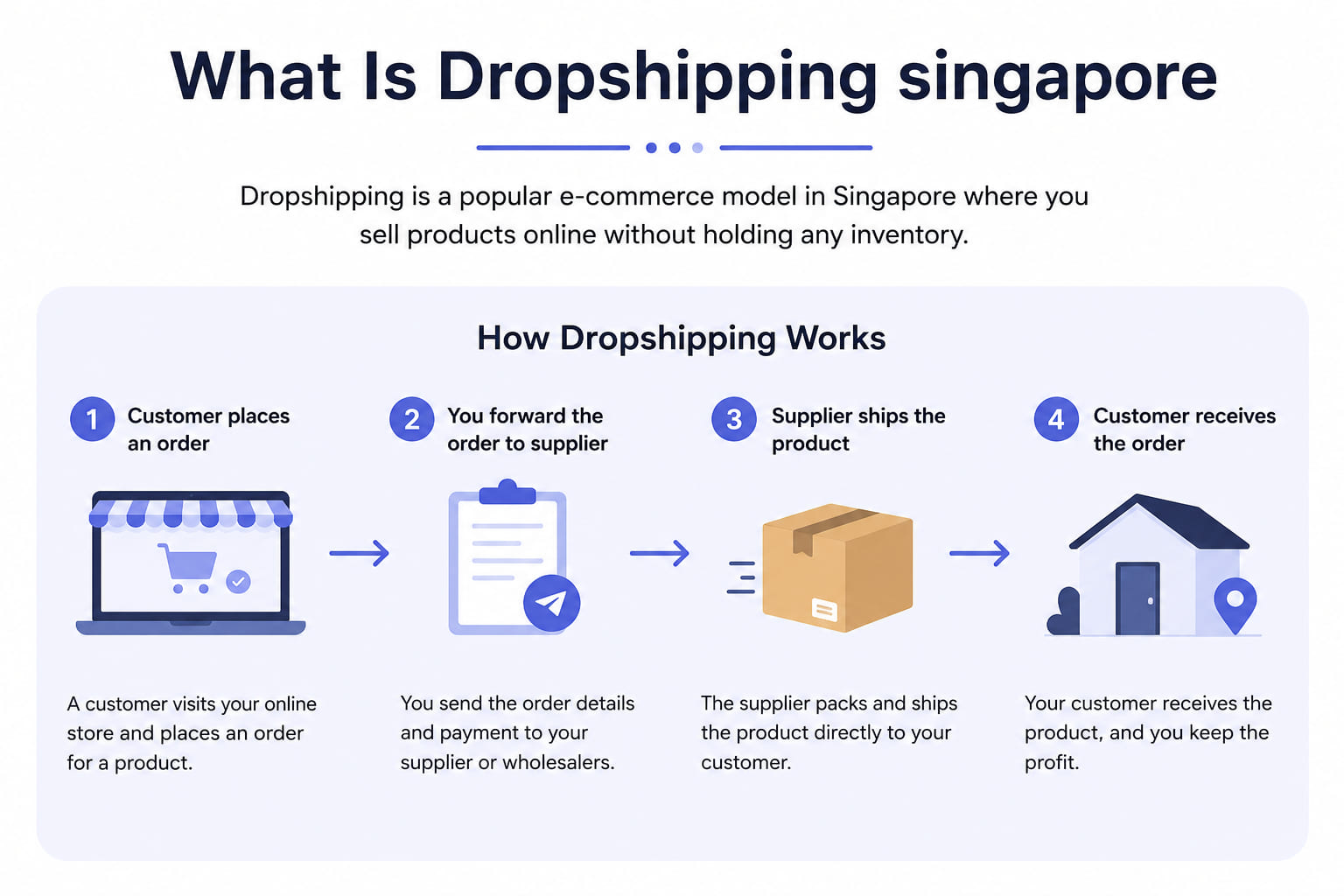
Dropshipping is a retail method where the store owner sells products without keeping them in stock. When a customer places an order, the store purchases the item from a third party, usually a supplier or manufacturer, who ships it directly to the customer. The seller never touches the product.
This model works particularly well in Singapore for a few reasons.
- Singapore is a regional logistics hub with fast customs clearance and reliable courier networks
- The local population has high trust in online payments through platforms like PayNow, credit cards, and digital wallets
- Consumers are used to buying from overseas sellers, so international suppliers are not a barrier
- Business registration through ACRA is quick and can often be completed within a day
Because there is no need to invest in inventory upfront, dropshipping lowers the financial barrier to starting an online business, making it appealing for first-time entrepreneurs, side hustlers, and small teams testing new product ideas.
See More: Shopify Singapore: Complete Setup Guide for Local Businesses
How to Start a Dropshipping Business Without Inventory
Step 1: Choose a Niche With Real Demand
The most common mistake new dropshippers make is picking a niche based on personal interest rather than market demand. Before building anything, validate that people are actually searching for and buying the type of product being considered.
Useful ways to validate a niche include:
- Checking Google Trends for search interest over time in Singapore
- Reviewing best-seller lists on Shopee and Lazada for similar products
- Searching relevant keywords to see how much competition already exists
- Looking at supplier platforms like AliExpress or CJdropshipping to confirm the product is genuinely available with reasonable shipping times to Singapore
A good niche typically has steady demand, is not overly saturated, and has healthy profit margins after shipping and platform fees are accounted for.
Step 2: Register the Business
Even a small online store benefits from proper registration. In Singapore, registering a business through ACRA as a sole proprietorship is the simplest route for most beginners, and it typically costs very little and takes about one working day to process.
Registration matters for a dropshipping website because:
- Payment gateways such as Stripe and PayPal Business often require a registered business entity
- It builds trust with customers who check company details before purchasing
- It allows the business to open a proper business bank account, keeping personal and business finances separate
Business owners planning to scale beyond a certain revenue threshold should also be aware of GST registration requirements, which currently apply once annual taxable turnover crosses a set limit set by IRAS.
Step 3: Choose the Right Ecommerce Platform

The website is the foundation of the entire dropshipping business, so choosing the right platform matters. The three most common options for a Singapore-based dropshipping store are:
Shopify Shopify is the most widely used platform for dropshipping worldwide. It integrates easily with supplier apps like DSers and Spocket, supports Singapore dollar pricing, and connects with local payment options through Stripe.
WooCommerce Built on WordPress, WooCommerce offers more flexibility and lower ongoing costs, but it requires more technical setup, including hosting, plugins, and security management.
Custom-built website Some businesses prefer a custom website designed specifically around their brand, product catalog, and target audience. This route offers more control over site speed, SEO structure, and user experience, which matters for building long-term organic traffic rather than depending only on paid ads.
For entrepreneurs who plan to invest in SEO and long-term brand building rather than short-term product testing, a professionally designed website often performs better than a generic theme-based store, since it can be structured from the start for search visibility and conversion.
See More: Shopify vs. WooCommerce: Which Is Better for Your Business?
Step 4: Find Reliable Suppliers
Supplier reliability directly affects customer satisfaction, since the seller depends entirely on the supplier to fulfill orders correctly and on time. Common supplier sources for Singapore-based dropshippers include:
- AliExpress and CJdropshipping for a wide product range with global shipping
- Local Singapore or Southeast Asia based suppliers, which offer faster delivery times and lower shipping costs to local customers
- Print-on-demand suppliers for custom apparel, accessories, or home goods
When evaluating a supplier, check average shipping time to Singapore, product quality through sample orders, return and refund policies, and communication responsiveness. A supplier with unreliable fulfillment can quickly damage a store’s reputation, even if the website and marketing are strong.
Step 5: Set Up Payment and Shipping
Singapore customers expect a smooth, localized checkout experience. At minimum, a dropshipping website should support:
- Credit and debit card payments through Stripe or a similar gateway
- PayNow, which is widely used and trusted by local shoppers
- Clear shipping timelines displayed at checkout, especially important since dropshipped items often ship from overseas
Being transparent about delivery times upfront reduces customer complaints and negative reviews later. Many successful dropshipping stores clearly state expected delivery windows on the product page itself.
Step 6: Build Trust Through Website Design and Content
Trust is one of the biggest hurdles for any new online store, and it becomes even more important for a dropshipping business where customers cannot see or touch the product in person.
A few elements that build credibility on a dropshipping website include:
- A clear About page explaining who is behind the business
- Genuine product photos and honest descriptions rather than copied supplier listings
- Visible contact information and responsive customer support
- Customer reviews and ratings displayed on product pages
- A professional, fast-loading website design that reflects the brand rather than a generic template
This is where working with an experienced web design partner makes a measurable difference. A well-structured, mobile-optimized website not only improves conversion rates but also supports better search engine rankings over time, since site speed and user experience are ranking factors search engines consider.
Step 7: Plan for SEO From Day One
Many dropshipping stores rely entirely on paid ads, which can become expensive and unsustainable as competition grows. Building organic search visibility alongside paid marketing creates a more stable, long-term traffic source.
Basic SEO practices for a new dropshipping website include:
- Writing unique product descriptions instead of copying supplier content
- Structuring category pages around keywords Singapore shoppers actually search for
- Optimizing page load speed, since slow websites rank lower and convert worse
- Publishing helpful content, such as buying guides or comparison articles, that attracts organic traffic before customers are ready to buy
- Ensuring the website is mobile-friendly, since the majority of Singapore ecommerce traffic comes from mobile devices
SEO takes longer to show results than paid ads, but it compounds over time and reduces long-term dependency on advertising spend.
Common Mistakes to Avoid
- Choosing suppliers based only on price without checking shipping reliability
- Using a generic, unbranded website theme that looks identical to thousands of other stores
- Ignoring page speed and mobile experience
- Skipping business registration, which limits payment gateway options and looks unprofessional to customers
- Underestimating the importance of clear shipping and return policies
Avoiding these mistakes early saves significant time and money compared to fixing them after the business has already launched.
Final Thoughts
Starting a dropshipping website in Singapore without holding inventory is one of the most accessible ways to enter ecommerce, but success depends heavily on the details: a validated niche, reliable suppliers, transparent shipping communication, and a website that builds genuine trust with customers. A generic store built in an afternoon rarely competes long-term against businesses that invest in proper design, structure, and SEO from the start.
For entrepreneurs who want their dropshipping website to look professional, load fast, and be structured for search visibility from day one, working with a dedicated web design team can make the difference between a store that struggles for traffic and one that grows sustainably.
iCreationsLAB helps Singapore businesses design and build ecommerce websites that are fast, mobile-optimized, and built with SEO in mind. If you are planning to launch a dropshipping store and want a website that supports long-term growth rather than just a quick setup, get in touch with iCreationsLAB’s web design Singapore team to discuss your project.