
Search behaviour has changed dramatically. Hundreds of millions of users now rely on AI tools like ChatGPT, Perplexity, Claude and Google’s AI Overviews to research products, compare services and make decisions. Traditional blue‑link rankings are no longer the only visibility game.
AI SEO is the practice of optimising your content so it can be understood, trusted, and cited by AI systems, while still performing strongly in traditional search engines. This guide explains how AI SEO works, how it differs from classic SEO, and what businesses should do in 2026 to stay discoverable across both human‑driven and AI‑driven search journeys.
What Is AI SEO?
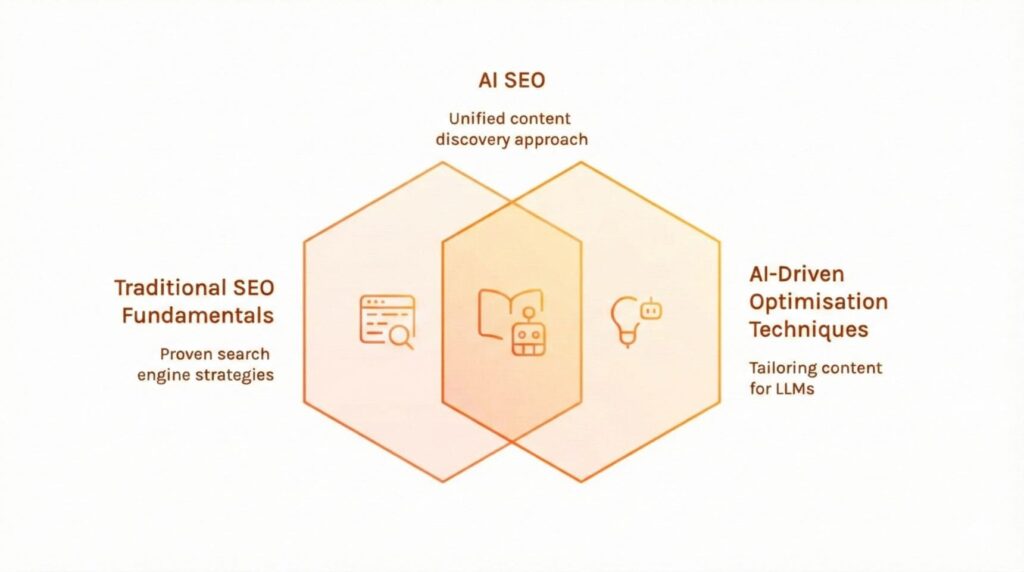
AI SEO is the optimisation of content for discovery across search engines and AI‑powered answer platforms. Instead of focusing only on keyword rankings, AI SEO ensures your content can be extracted, interpreted, and referenced by large language models (LLMs).
It combines:
- Proven SEO foundations (technical health, authority, relevance)
- Content structuring for machine comprehension
- Entity‑based optimisation and topical authority
- Citation‑ready, high‑information‑gain content
With the AI‑powered SEO market valued in the tens of billions and most SEO professionals now using AI in some form, optimisation for generative search is no longer optional — it’s an extension of modern SEO.
See More: Website Design Price Guide | How Much Does It Really Cost?
Why AI SEO Matters Now
Users no longer search with short keyword phrases alone. They ask detailed, conversational questions and expect complete answers instantly. AI platforms respond by synthesising information from multiple trusted sources and citing the most authoritative ones.
If your brand is not:
- Crawlable by AI systems
- Structured clearly
- Backed by credible data
- Recognised as a topical authority
…it simply won’t appear in AI‑generated answers, even if your website ranks well on Google.
How AI SEO Differs from Traditional SEO
From Keywords to Questions
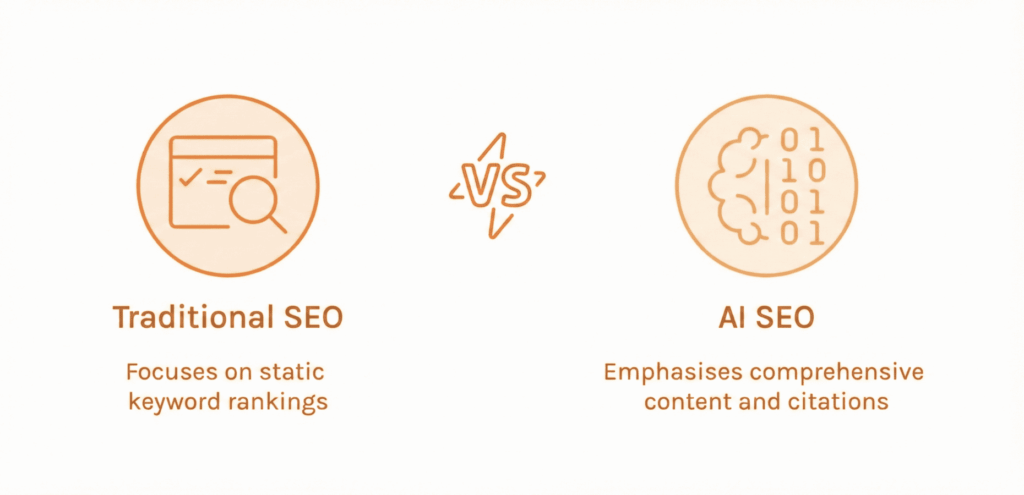
Traditional SEO often targets short keywords. AI search queries, by contrast, are longer, more specific, and framed as natural language questions. Content must therefore answer entire problems, not just match phrases.
From Rankings to Citations
In classic SEO, success is measured by SERP positions. In AI SEO, success is measured by citations and mentions inside AI responses. Being referenced directly by an AI assistant places your brand at the decision‑making moment.
From Page‑Level to Entity‑Level Understanding
AI systems evaluate context, relationships and credibility across your entire content ecosystem. They look at how consistently your brand, expertise and data appear across the web — not just on a single page.
See More: Web Design Singapore: Top 5 Professional Web Design Companies
AI SEO Terminology Explained (GEO, LLMO, AEO)
You may see different labels used across the industry:
- GEO (Generative Engine Optimisation)
- LLMO (Large Language Model Optimisation)
- AEO (Answer Engine Optimisation)
Despite different names, they describe the same concept: optimising content so AI systems can confidently generate answers using your information. The terminology matters far less than execution.
The Research Behind AI SEO
Academic research from leading institutions has demonstrated that AI platforms are significantly more likely to cite sources that:
- Use clear structure
- Include statistics and factual references
- Provide quotable statements
- Demonstrate authority and originality
These findings validate what practitioners now see in real‑world campaigns: content optimised for AI comprehension consistently earns higher visibility in generative answers.
Core AI SEO Strategies That Work
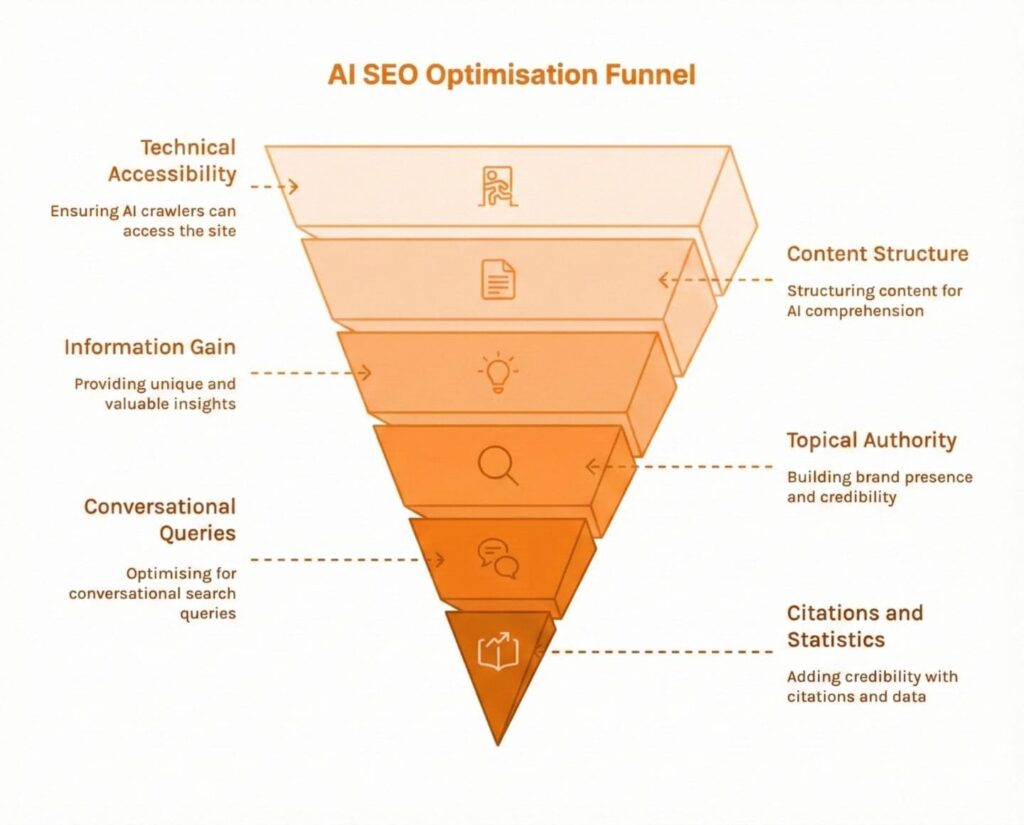
1. Ensure Technical Accessibility for AI Crawlers
AI platforms rely on specialised crawlers to retrieve content. If these bots are blocked, your content is invisible.
Best practice:
- Allow recognised AI crawlers in robots.txt
- Maintain an accurate XML sitemap
- Avoid accidental noindex or disallow rules
Technical accessibility is the foundation — without it, no AI optimisation matters.
2. Structure Content for Machine Understanding
AI systems favour predictable, well‑organised content.
Key principles:
- One clear H1 defining the topic
- Logical H2 and H3 sub‑sections
- Descriptive, question‑based headings
- Bullet points and numbered lists where appropriate
Schema markup (FAQ, HowTo, Article, Product) further improves extractability and clarity.
3. Create High Information‑Gain Content
AI platforms prioritise sources that add new value, not recycled advice.
Ways to increase information gain:
- Original frameworks or methodologies
- Real case studies with measurable results
- Expert commentary grounded in experience
- Data‑backed insights and analysis
Specificity signals credibility to AI models.
See More: Best Web Developer Singapore | Build Fast, Secure & SEO-Friendly Websites
4. Build Strong Topical Authority
AI systems assess authority across the wider web, not just your site.
Authority signals include:
- Mentions in reputable publications
- Guest contributions and expert commentary
- Consistent brand profiles on trusted platforms
- Participation in industry discussions and communities
Your brand should appear wherever meaningful conversations in your niche take place.
5. Optimise for Conversational Queries
AI queries are human‑like and contextual.
Optimisation tips:
- Write headings that mirror real questions
- Answer directly in the opening sentences
- Expand with supporting explanations
- Use FAQ sections for clarity and coverage
Clear answers improve both AI extraction and human experience.
6. Use Credible Citations and Statistics
AI‑friendly content references reliable sources.
Best practices:
- Link to government data, academic research, and industry reports
- Use recent statistics where possible
- Attribute quotes clearly
- Avoid vague or unsupported claims
Citations reinforce trust and improve AI selection likelihood.
7. Maintain Strong E‑E‑A‑T Signals
Experience, Expertise, Authoritativeness and Trustworthiness remain critical.
Demonstrate this by:
- Showcasing first‑hand experience
- Publishing author bios with credentials
- Highlighting client results and testimonials
- Maintaining transparency and security standards
AI systems increasingly rely on these signals when choosing sources.
See More: Best Web Design Agency In Singapore – Top Picks & Guide
Platform‑Specific AI SEO Considerations
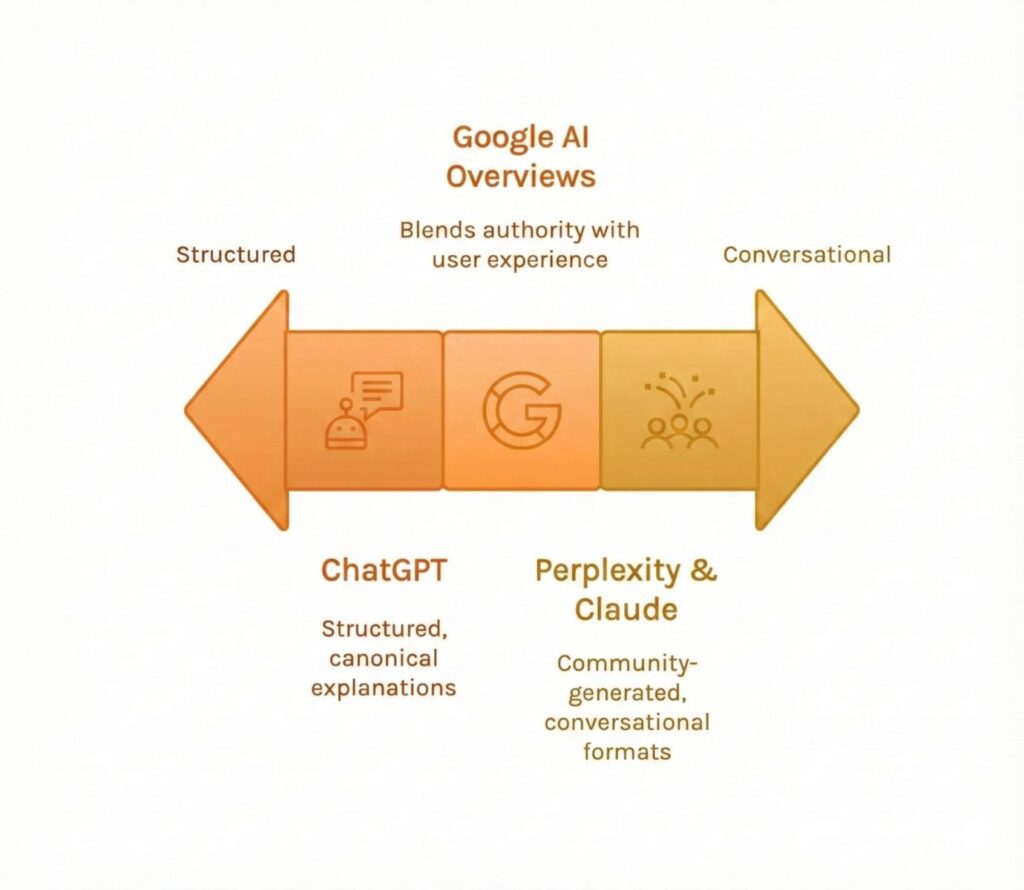
ChatGPT
ChatGPT favours:
- Clear, neutral explanations
- Structured content
- Canonical definitions and summaries
Ensure its crawler can access your site and track referrals where possible.
Google AI Overviews
AI Overviews appear most often for informational queries.
Optimise by:
- Providing concise first‑paragraph answers
- Using comparison tables and step‑by‑step guides
- Supporting claims with data and experience
Perplexity & Claude
These platforms value:
- Conversational tone
- Community‑validated insights
- Practical, experience‑based explanations
Measuring AI SEO Performance
Traditional SEO metrics alone are insufficient.
Track:
- Brand citations in AI responses
- Referral traffic from AI platforms
- Conversion quality of AI‑driven visits
- Content types most frequently referenced
Manual testing across AI tools also helps identify visibility gaps and opportunities.
Common AI SEO Mistakes
- Relying entirely on AI‑generated content without human expertise
- Ignoring traditional SEO foundations
- Blocking AI crawlers unintentionally
- Publishing generic content with no original insight
- Neglecting user experience and clarity
AI SEO rewards quality, not shortcuts.
The Future of AI SEO
AI search will continue to fragment across platforms, formats and devices. Winning strategies will:
- Integrate traditional SEO with AI optimisation
- Expand beyond text into visuals, video and audio
- Focus on entities, expertise and real‑world credibility
AI SEO is not a replacement for SEO — it is its next evolution.
Looking for a professional website that converts visitors into customers?
Our team provides professional website design services in Singapore tailored to your business goals.
Contact us to schedule a free consultation and explore the right solution for your brand.