
The Lion City is a dynamic hub for digital commerce, making a compelling Ecommerce Web Design Singapore strategy non-negotiable for success. Simply having an online presence isn’t enough — your platform must be built and optimized to sell. This guide walks you through everything you need to know about Ecommerce Web Design Singapore, from core features and the seven pillars of success, to realistic cost expectations and how to choose the right agency.
1. The Critical Difference: Ecommerce vs. Standard Web Design
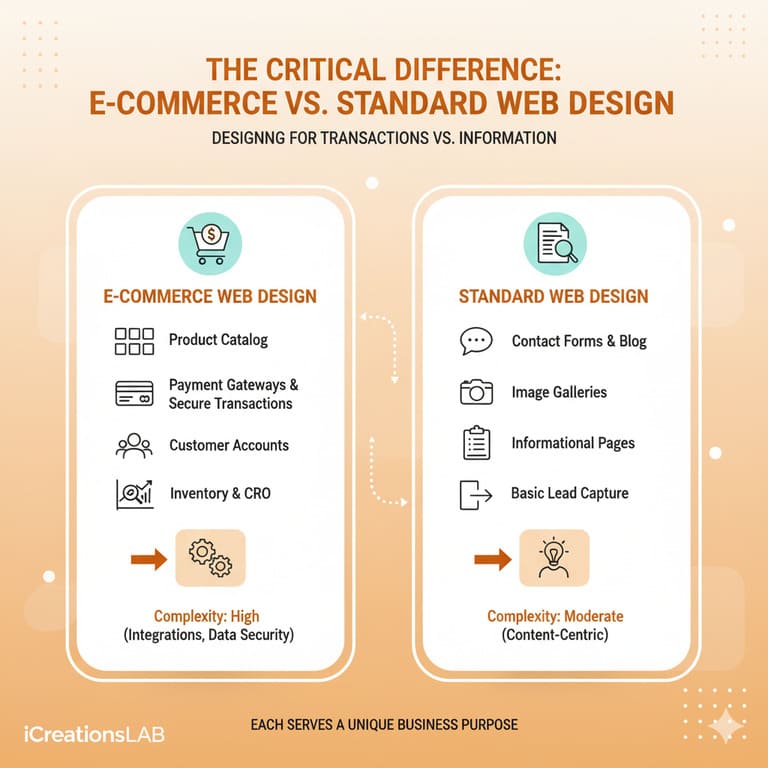
While standard Web Design Singapore focuses on aesthetics and information delivery, Ecommerce design focuses fiercely on conversion. Your website is not a brochure; it is a 24/7 automated sales representative.
Key requirements for Ecommerce Web Design Singapore include:
- Secure Payment Gateways — integration with local methods (PayNow) and international credit cards
- Inventory Management — real-time synchronization of stock levels
- Shipping Calculators — dynamic rates based on location and weight, crucial for SG and regional sales
- User Account Management — allowing customers to track orders and save details
Learn more about our web design service in Singapore.
2. The 7 Pillars of Successful Ecommerce Web Design in Singapore
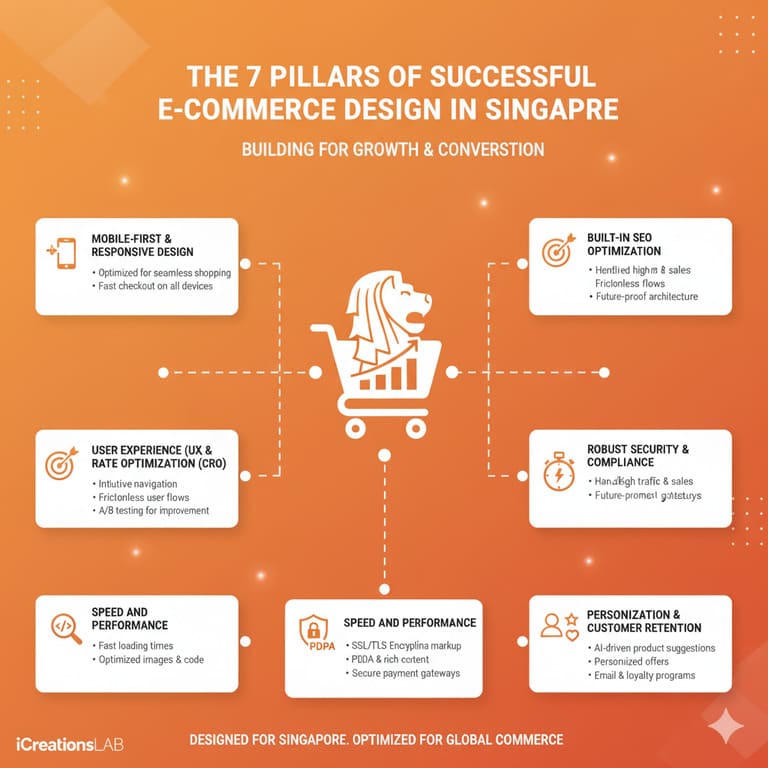
Building a high-performing ecommerce platform requires more than just attractive visuals it demands a seamless blend of technology, psychology, and market understanding. For businesses in Singapore, where online competition and customer expectations are exceptionally high, an expert Web Design Singapore team focuses on these seven essential pillars to ensure success.
A. Mobile-First & Responsive Design
With the majority of online shoppers in Singapore browsing via mobile devices, a mobile-first approach is the standard, not an option. Your ecommerce store must deliver a seamless, intuitive experience across all screen sizes.
Key mobile design strategies:
- Adaptive layouts that automatically adjust for smartphones, tablets, and desktops
- Large, tap-friendly buttons for easy navigation and checkout
- Optimized image compression to ensure pages load in under 3 seconds
- Minimalist navigation menus and sticky cart icons for convenience
Mobile-first design not only improves user satisfaction but also boosts search rankings, since Google prioritizes mobile usability in its ranking algorithm.
B. User Experience (UX) & Conversion Rate Optimization (CRO)
UX and CRO are the backbone of every profitable Ecommerce Web Design Singapore project. Together, they determine how easily customers navigate your site and how likely they are to complete a purchase.
Best practices:
- Intuitive Navigation — clear product categories, predictive search, smart filtering
- Streamlined Checkout — fewer steps, guest checkout, local payment gateways (PayNow, GrabPay, credit/debit cards)
- Engaging Product Presentation — multiple angles, zoom, lifestyle photos, short videos
- Trust Builders — visible security badges, transparent shipping info, customer reviews
C. Platform Scalability
Your chosen platform should support both current needs and future ambitions. Whether your store starts on Shopify, WooCommerce, or a custom build, scalability ensures smooth performance as your catalog, traffic, and regional operations grow.
Key considerations:
- Modular architecture that adds features without a full rebuild
- Cloud-based hosting for peak-season traffic surges
- Multi-currency and multilingual support for ASEAN expansion
- Integration readiness for ERP, CRM, and inventory systems
D. Speed and Performance
In ecommerce, every second counts — even a small delay can reduce conversions, because shoppers abandon slow pages. For Singapore’s fast-paced consumers, speed directly impacts trust and purchase decisions.
To ensure high performance:
- Use a CDN (Content Delivery Network) for faster global content delivery
- Optimize images with next-gen formats (WebP)
- Enable caching and lazy loading
- Host on high-performance servers located in or near Singapore
E. Robust Security and Compliance
Ecommerce success depends heavily on trust. A credible ecommerce design agency prioritizes security from day one.
Critical components:
- SSL Certificates to encrypt communication
- PCI DSS Compliance for payment protection
- Two-Factor Authentication (2FA) for admin access
- Regular security audits and backups
- PDPA Compliance (Personal Data Protection Act) for user data
F. Built-in SEO Optimization
Even the best-designed ecommerce store fails if customers can’t find it. SEO should be built into the design — not bolted on afterward.
Core SEO design practices:
- Clean, keyword-optimized URLs and metadata for every product
- Schema markup for Google Shopping and product snippets
- Descriptive image alt text for accessibility and keyword support
- Fast page loading for both UX and rankings
- Unique product content that avoids duplication
An SEO-optimized structure helps your products rank for local searches like “buy skincare online Singapore” or “electronics ecommerce store Singapore.”
G. Personalization and Customer Retention
Acquiring customers is expensive — retention is where profitability lives.
Effective retention strategies:
- AI-powered product recommendations
- Abandoned cart recovery emails
- Loyalty and rewards programs
- Personalized promotions for birthdays and VIP customers
- Omnichannel integration across online and in-store
3. Understanding the Cost of Web Design in Singapore
Costs vary dramatically based on complexity:
| Solution Type | Typical Cost Range (SGD) | Ideal For | Key Features |
| Basic (Template-based) | $3,000 – $8,000 | Small startups, low SKUs | Basic payment integration, standard theme customization. |
| Mid-Range (Customized CMS) | $8,000 – $25,000 | Growing SMEs, specific feature needs | Custom UX/UI, inventory sync, advanced SEO setup. |
| Enterprise (Custom Build) | $25,000+ | Large corporations, unique business logic | Full custom integration, multiple currencies, API links to ERP/CRM. |
Note: These ranges exclude ongoing costs like hosting, maintenance, and marketing.
See also: Website Design Cost in Singapore: Complete Pricing Guide
4. How to Choose the Right Ecommerce Web Design Singapore Agency
The right agency doesn’t just design attractive pages — it builds a revenue-generating platform tailored to your business and the local market.
A. Proven Ecommerce Portfolio
- Live ecommerce projects, not just mockups
- Platform expertise (Shopify, WooCommerce, custom frameworks)
- Case studies with measurable results
- Industry relevance to your niche
B. Conversion-Focused Approach
- Discusses KPIs like conversion rate, AOV, bounce rate
- Applies UX/UI best practices
- Uses GA4, Hotjar, or Meta Pixel for tracking
- Offers A/B testing
C. Deep Understanding of the Local Market
- Awareness of Singaporean shopper behavior
- Local payment integrations (PayNow, GrabPay, ShopeePay, Atome)
- Multilingual support (English, Mandarin, Malay)
- PDPA and local ecommerce compliance knowledge
D. Transparent Pricing & Process
- Detailed quotations with deliverables and timelines
- Clear scope on SEO, hosting, and maintenance inclusions
- Milestone-based payments
- Clear development process from wireframe to launch
E. Comprehensive Post-Launch Support
- Maintenance plans (bug fixes, updates, upgrades)
- Security monitoring and malware scans
- Backup and recovery solutions
- Scalability options for future growth
- CMS training and handover
F. Client Reviews & Long-Term Relationships
- Check Google Reviews, Clutch, or Facebook ratings
- Ask about repeat clients and long-term contracts
- Request testimonials or references
- Look for industry awards or recognitions
See also: How to Choose the Right Web Development Company in Singapore
Frequently Asked Questions About Ecommerce Web Design Singapore
1. What is the average cost of Ecommerce Web Design Singapore services?
Costs generally range from SGD 8,000 to SGD 15,000 for standard ecommerce projects, while larger corporate builds or custom web applications can exceed SGD 50,000. Basic template-based stores start around SGD 3,000. Government grants like the Productivity Solutions Grant (PSG) and Enterprise Development Grant (EDG) can help subsidize costs for eligible Singapore businesses.
2. Which ecommerce platforms are most popular for businesses in Singapore?
Shopee, Lazada, Amazon Singapore, and Shopify are the leading platforms. Shopee is favored for its mobile-first tools and seller support; Lazada offers strong regional logistics; Amazon suits sellers wanting broad trust and reach; and Shopify remains the top choice for fully customizable, scalable ecommerce websites. Carousell, Zalora, and RedMart serve specific niches.
3. How long does an Ecommerce Web Design Singapore project typically take?
Most projects take 6 to 8 weeks, covering discovery, design, development, content integration, testing, and launch. Complex or fully custom builds can take 8–12 weeks or more.
4. Why is SEO important for Ecommerce Web Design Singapore?
SEO drives organic visibility in a highly competitive digital market. It ensures mobile-friendly, fast-loading, easy-to-navigate stores that rank well for local searches — directly improving credibility, engagement, and conversions.
5. Should I choose a custom-built website or a CMS like WordPress?
| Factor | Custom-Built | WordPress CMS |
| Flexibility | Very high | Moderate |
| Development Time | 6–12+ weeks | 2–6 weeks |
| Cost | SGD 6,000–20,000+ | SGD 1,000–5,000 |
| Maintenance | Requires developer support | Easier for non-technical users |
| Scalability | Highly scalable | Good for small/medium sites |
WordPress suits startups and SMEs prioritizing budget and speed; custom builds suit enterprises needing unique functionality.
6. What’s the difference between a standard website and an ecommerce website?
Standard sites build credibility and generate leads through information. Ecommerce sites are built to transact — requiring shopping carts, payment gateways, inventory management, and stronger security (SSL, PCI DSS) to protect customer data.
7. Do Ecommerce Web Design Singapore agencies offer maintenance packages?
Yes. Most offer monthly plans (typically SGD 200–450+) covering backups, security updates, bug fixes, SEO enhancements, and technical support, plus pay-as-you-go options for occasional tasks.
8. What role does responsive design play in the Singapore market?
With Singapore’s very high mobile penetration, responsive design ensures fast, seamless experiences across devices — reducing bounce rates, supporting Google’s mobile-first indexing, and improving both rankings and conversions.
Learn more about our web design service in Singapore.