
In Singapore’s dynamic and highly competitive education landscape, a well-designed website is no longer a luxury but a fundamental necessity for schools, tuition centres, and EdTech platforms. A robust online presence serves as the digital front door, a crucial communication hub, and often, the first point of contact for prospective students, parents, and educators. Effective Website Design for education institutions in Singapore must navigate a unique set of challenges, from stringent regulatory compliance to diverse stakeholder needs and the imperative to build trust and credibility.
At iCreationsLAB, a leading Singapore web design company since 2008, we understand these nuances intimately. We specialise in professional Website Development, E-Commerce solutions, Mobile Web Design, CMS, Web Applications, Social Media Marketing, Email & SMS Marketing, and Online Marketing Strategies tailored to the education sector. Our extensive experience has shown us that a successful educational website goes beyond aesthetics; it must be intuitive, informative, secure, and highly engaging to foster a thriving digital community.
This comprehensive guide delves into the essential strategies and features required to create high-performing websites for educational entities in Singapore, ensuring they not only meet but exceed the expectations of their target audience.
What is Unique About Web Design for the Education Sector in Singapore?
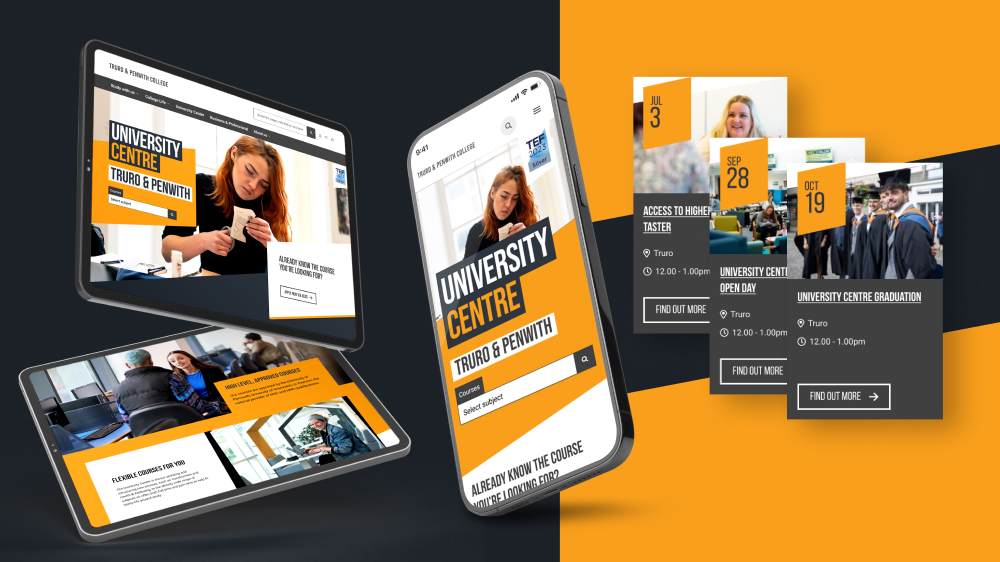
Designing websites for educational institutions in Singapore presents a distinct set of considerations compared to other industries. The unique ecosystem demands a tailored approach that addresses regulatory frameworks, diverse user groups, market competition, and the paramount need for trust.
Navigating MOE Regulations and Guidelines:
Compliance with local education policies is crucial. The Ministry of Education (MOE) sets specific guidelines for schools, particularly concerning information dissemination, student data privacy, and appropriate content. Websites must adhere to these standards to maintain credibility and avoid legal issues. For example, schools need to ensure that official announcements, curriculum details, and policy updates are accurately reflected and easily accessible.
Addressing Diverse Stakeholder Needs (Parents, Students, Educators):
Websites must cater to parents seeking information, students needing resources, and educators requiring platforms. Parents often look for admission details, school fees, academic calendars, and co-curricular activities. Students require access to learning materials, timetables, and communication channels. Educators might need secure portals for administrative tasks, lesson planning, and student progress tracking. Balancing these varied needs within a single, coherent design is a significant challenge.
The Competitive Landscape of Singapore’s Education Market:
Differentiation is key in a crowded market. Singapore boasts a high density of quality educational institutions, from public schools and international schools to a myriad of tuition centres and rapidly expanding EdTech platforms. A website must effectively convey the institution’s unique value proposition, teaching philosophy, and success stories to stand out. This often involves showcasing distinctive programs, facilities, and the ethos that defines the institution.
Emphasis on Trust, Credibility, and Security:
Security of student data and clear communication build trust. Parents entrust their children’s education and personal information to these institutions. Therefore, the website must project an image of reliability, professionalism, and transparency. This includes robust data privacy measures, clear communication channels, easily verifiable contact information, and a professional aesthetic that inspires confidence. Any compromise in security or clarity can severely damage an institution’s reputation.
Key Features of a High-Performing School Website in Singapore
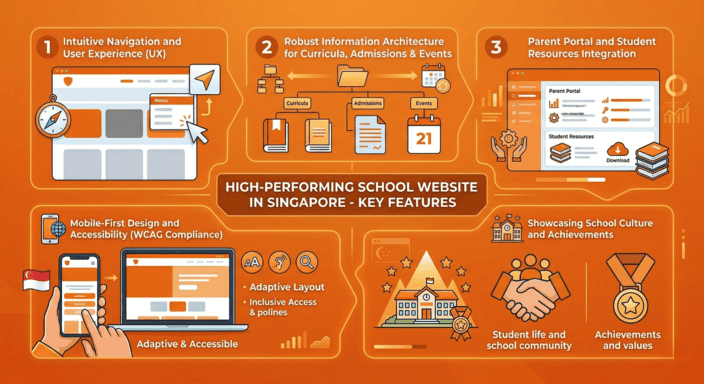
A school website is more than just an online brochure; it’s a dynamic ecosystem designed to serve multiple functions. From admissions to daily operations, its features must be meticulously planned to ensure optimal functionality and user satisfaction.
Intuitive Navigation and User Experience (UX):
Easy access to critical information like school fees, term dates, and contact details. Parents and prospective students should be able to find what they need within a few clicks. A clean, uncluttered layout with clear calls to action (CTAs) and a logical menu structure is paramount. Our experience shows that a well-thought-out UI UX design significantly reduces bounce rates and improves engagement.
Robust Information Architecture for Curricula, Admissions & Events:
Clear sections for academic programs, co-curricular activities, and application processes. The website should act as a comprehensive knowledge base, detailing everything from subject syllabi and assessment methods to sports clubs, arts programs, and community service initiatives. An easily searchable events calendar for school holidays, parent-teacher conferences, and performances is also essential.
Parent Portal and Student Resources Integration:
Secure logins for parents to check grades, notices, and payment. A dedicated portal enhances communication and convenience. For students, access to learning management systems (LMS), assignment submission platforms, library resources, and counseling services can greatly support their academic journey.
Mobile-First Design and Accessibility (WCAG Compliance):
Website must be responsive across all devices and accessible to users with disabilities. With the majority of users accessing websites via smartphones, a mobile-first approach is non-negotiable. Furthermore, adhering to Web Content Accessibility Guidelines (WCAG) ensures that the website is usable by individuals with visual, auditory, cognitive, or motor impairments, demonstrating inclusivity.
You may also like: Mobile Friendly Websites – Why They Matter for SEO.
Showcasing School Culture and Achievements:
Visual storytelling through galleries, testimonials, and news sections. Prospective parents want to understand the school’s ethos, values, and the vibrant life within its walls. High-quality photography and videography, student success stories, alumni testimonials, and regular news updates help paint a compelling picture. This humanises the institution and helps build an emotional connection.
See also
👉 Web Design Singapore for Startups: How to Launch Fast on a Tight Budget
👉 Website Design Singapore: How to Build a Stunning Website That Converts
Optimising Web Design for Singaporean Tuition Centres
Tuition centres operate in an incredibly competitive niche within Singapore’s education sector. Their websites need to be highly conversion-focused, highlighting expertise, convenience, and success to attract and retain students.
Highlighting Subject Expertise and Success Stories:
Clear presentation of subjects offered, teaching methodologies, and student improvements. Tuition centres need to demonstrate their deep knowledge in specific subjects (e.g., A-Level Math, PSLE English). Showcasing past student achievements, testimonials about grade improvements, and unique teaching approaches provides tangible proof of value. This can be achieved through dedicated subject pages with detailed syllabi, sample materials, and success rates.
Streamlined Course Registration and Payment Systems:
Easy online sign-up for courses and secure payment gateways. The process from browsing courses to enrolling should be seamless. An integrated e-Commerce system allows parents to register and pay securely, reducing administrative burden and improving conversion rates. This includes clear pricing, package options, and various payment methods.
Interactive Timetables and Class Schedules:
Up-to-date and user-friendly display of class timings and availability. Parents and students need to quickly identify suitable class slots. An interactive calendar or timetable that shows real-time availability, allows filtering by subject or level, and even facilitates direct booking can be a significant advantage.
Building Trust Through Educator Profiles and Testimonials:
Featuring qualified tutors and positive reviews from parents/students. In a service-oriented industry like tuition, the quality of educators is paramount. Detailed profiles of tutors, highlighting their qualifications, experience, and teaching philosophy, build confidence. Authentic testimonials and case studies from satisfied parents and students are powerful social proof.
Local SEO Strategies for Geographic Targeting:
Optimizing for ‘tuition centre [area]’ searches to attract local students. For many tuition centres, geographic proximity is a key factor for parents. Implementing robust Search Engine Optimization (SEO) strategies focused on local keywords (e.g., “math tuition Bedok,” “science tuition Jurong”), optimising Google My Business profiles, and encouraging local reviews are crucial for appearing in relevant local search results.
See also
👉 Ecommerce Web Design in Singapore – What You Need to Know
👉 The Real Cost of Web Development in Singapore: A Breakdown by Features, Platforms & Complexity
Designing for EdTech Platforms: User Engagement and Scalability
EdTech platforms represent the bleeding edge of educational innovation, demanding highly interactive, scalable, and secure web design solutions. The focus here is on delivering personalised learning experiences and fostering continuous engagement.
Personalised Learning Journeys and User Dashboards:
Customised user experiences based on learning progress and preferences. EdTech platforms thrive on personalisation. User dashboards should provide clear visibility into progress, recommended courses, and tailored content pathways. This requires sophisticated backend integration and a user-friendly frontend that adapts to individual learner needs, enhancing engagement and retention.
Gamification Elements and Interactive Content:
Incorporating quizzes, badges, and progress trackers to motivate learners. To combat screen fatigue and maintain interest, EdTech platforms often integrate gamified elements. This can include points for completing modules, badges for mastering skills, leaderboards, and interactive exercises that make learning fun and rewarding.
Seamless Integration with Learning Management Systems (LMS):
Compatibility with popular LMS platforms like Moodle, Canvas, or proprietary systems. Many educational institutions already use an LMS. EdTech platforms need to integrate smoothly, whether by offering API access or direct plug-ins, to ensure a cohesive learning environment and avoid data silos. This also extends to integrating with communication tools and virtual classrooms.
Scalable Architecture for Growing User Bases and Content:
Designing for future expansion of courses, features, and users without performance degradation. EdTech platforms are often designed for rapid growth. The underlying Website Application architecture must be robust and scalable to handle increasing traffic, new course content, and additional features without compromising speed or reliability. Cloud-based solutions and modular design principles are often employed here.
You may also like: Difference Between Website and Web Application.
Data Privacy and Security for Educational Content:
Adhering to strict data protection laws for student information and academic records. Given the sensitive nature of student data, EdTech platforms must implement the highest standards of cybersecurity. This includes encryption, secure authentication, regular security audits, and strict compliance with local regulations like Singapore’s Personal Data Protection Act (PDPA) and international standards like GDPR. Trustworthiness is paramount for user adoption.
The Web Design Process for Educational Institutions: A Step-by-Step Guide
Developing a high-quality educational website is a structured process that ensures all requirements are met, from initial concept to ongoing maintenance. At iCreationsLAB, our proven methodology guarantees a successful outcome.
Phase 1: Discovery and Strategy (Goals, Audience, Competitor Analysis):
Defining objectives, identifying target users, and analyzing competitors’ strengths/weaknesses. This foundational phase involves in-depth consultations to understand the institution’s mission, vision, and specific goals for the website. We identify the primary audience (e.g., prospective parents, current students, alumni) and their needs, and conduct a thorough analysis of competitor websites to identify opportunities for differentiation.
Phase 2: Information Architecture and Wireframing:
Structuring content logically and creating blueprints for page layouts. Based on the strategy, we develop a comprehensive information architecture (Sitemap) that dictates how content will be organised and navigated. Wireframes are then created – skeletal visual guides that represent the layout and functionality of each page, ensuring a user-friendly flow before any visual design elements are applied.
Phase 3: Visual Design and Branding Integration:
Designing the look and feel, incorporating school/centre branding guidelines. This phase brings the wireframes to life with visual design. Our designers create mockups that reflect the institution’s brand identity, including colour palettes, typography, imagery, and overall aesthetic. The goal is to create a visually appealing, professional, and consistent online presence that resonates with the target audience.
Phase 4: Development and Content Integration:
Building the website and populating it with relevant text, images, and multimedia. This is where the actual coding happens. Our developers transform the approved designs into a fully functional website, often using robust CMS platforms like WordPress for ease of content management. All content – text, images, videos, and interactive elements – is meticulously integrated and optimised.
You may also like: What is WordPress? WordPress tutorial and the most important notes about WordPress.
Phase 5: Testing, Launch, and Post-Launch Maintenance:
Thorough quality assurance, deployment, and ongoing updates/security patches. Before launch, the website undergoes rigorous testing across various devices and browsers to ensure functionality, speed, and responsiveness. Once approved, it is deployed to a secure hosting environment. Post-launch, we provide ongoing Web & Security Maintenance, regular updates, and security patches to ensure the website remains performant and secure.
See also
👉 How Long Does It Take to Build a Website?
👉 How to Choose the Right Web Development Company in Singapore
👉 Best Web Developer Singapore 2026 | Build Fast, Secure & SEO-Friendly Websites
Measuring Success: Analytics, SEO, and Ongoing Optimisation for Education Websites
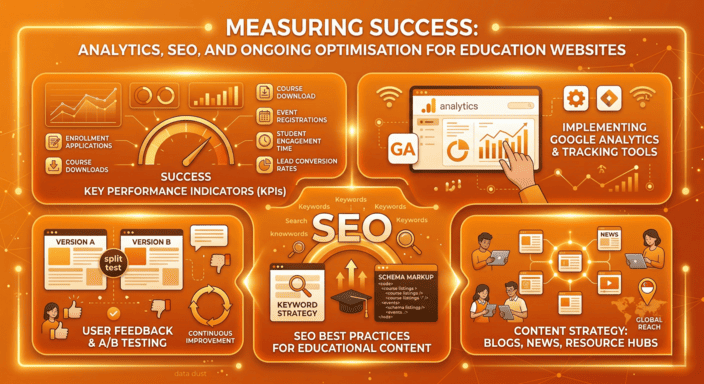
A website’s launch is not the end but the beginning of its journey. Continuous monitoring, analysis, and optimisation are vital to ensure it remains effective, relevant, and achieves its strategic objectives.
Key Performance Indicators (KPIs) for Education Websites:
Tracking metrics like admission inquiries, course registrations, parent portal logins, and resource downloads. For schools, KPIs might include applications started/completed, prospectus downloads, and event registrations. Tuition centres would focus on course sign-ups and trial class bookings. EdTech platforms would track user retention, course completion rates, and premium feature subscriptions. Defining these KPIs upfront is essential for measuring success.
Implementing Google Analytics and Other Tracking Tools:
Setting up event tracking and conversion goals to monitor user actions. Tools like Google Analytics provide invaluable insights into user behaviour. We implement custom event tracking to monitor specific actions, such as clicks on admission forms, video plays, or document downloads. Conversion goals help quantify the success of various website elements in driving desired outcomes.
SEO Best Practices for Educational Content (Keywords, Schema Markup):
Optimizing for relevant keywords, using educational schema markup, and building high-quality backlinks. To ensure discoverability, education websites need robust SEO. This involves thorough keyword research (e.g., “international school Singapore,” “IB tuition,” “online learning platform”), optimising content for these terms, and implementing schema markup (like Schema.org for educational institutions, courses, or events) to help search engines understand the content better. Building authoritative backlinks from other educational sites or reputable directories also boosts ranking.
You may also like: SEO vs SEM Explained: When Should You Run Ads and When Should You Invest in SEO?.
User Feedback and A/B Testing for Continuous Improvement:
Gathering insights from surveys, heatmaps, and split testing different design elements. User feedback, whether through direct surveys, feedback forms, or analysis of heatmaps (showing where users click and scroll), provides critical insights. A/B testing allows for comparing different versions of a page or element to see which performs better in terms of conversions or engagement, leading to data-driven improvements.
Content Strategy: Blogs, News, and Resource Hubs:
Regularly publishing valuable content to attract organic traffic and establish authority. A dynamic content strategy is key for long-term SEO and engagement. This includes a blog featuring articles on educational topics, school news updates, student achievements, and a resource hub offering downloadable guides, research papers, or study tips. This not only attracts organic traffic but also positions the institution as a thought leader.
See also
👉 AI SEO in 2026: A Practical Guide to Ranking in Google AI Overviews, ChatGPT & Generative Search
Summary
Effective web design for education institutions in Singapore is a multifaceted endeavour, requiring a deep understanding of local regulations, diverse user needs, and the competitive educational landscape. From intuitive navigation and secure portals for schools to conversion-focused features for tuition centres and scalable, engaging designs for EdTech platforms, each segment demands a specialised approach. By focusing on user experience, robust information architecture, mobile-first design, strong branding, and continuous optimisation through analytics and SEO, educational organisations can create powerful online platforms that truly serve their communities and achieve their strategic goals. Partnering with an experienced agency like iCreationsLAB ensures that these complex requirements are met with professionalism and expertise, delivering a website that stands out and performs.
FAQ
How much does a web design for an education institution in Singapore typically cost?
Costs vary significantly based on complexity, features, and agency. A basic tuition centre website might start from S$3,000-S$5,000, while a comprehensive school or EdTech platform can range from S$10,000 to S$50,000+. Factors like custom functionalities, integrations with LMS, advanced security features, and ongoing maintenance plans will influence the final price. For an accurate estimate, it’s best to consult with a professional web design company like iCreationsLAB to discuss your specific requirements.
What is the most important feature for a school website in Singapore?
Beyond aesthetics, clear and intuitive navigation for critical information (admissions, curriculum, contact) and a robust, secure parent/student portal are paramount for engagement and trust. Parents need to easily find vital details, while dedicated portals foster seamless communication and provide essential resources, directly impacting satisfaction and administrative efficiency.
Do education websites in Singapore need to be mobile-responsive?
Absolutely. A significant portion of parents and students access information via mobile devices. Mobile-first design ensures a seamless user experience and better search engine rankings. Google prioritises mobile-friendly websites, meaning a non-responsive site will likely suffer in search visibility and user engagement.
How can an EdTech platform ensure data security and privacy for its users?
Implementing SSL certificates, robust encryption, secure login protocols, regular security audits, and strict adherence to Singapore’s PDPA and international data privacy standards are crucial. Strong access controls, data anonymisation where possible, and transparent privacy policies also build user trust.
What’s the role of SEO for a tuition centre website in Singapore?
SEO is vital for tuition centres to be discovered by local parents and students. Optimizing for local keywords (e.g., ‘math tuition Bedok’), having a Google My Business profile, and getting positive reviews significantly boosts visibility. Effective SEO ensures that when parents search for tuition services in their area, your centre appears prominently.
Need a Professional Web Design for Your Education Institution?
Is your school, tuition centre, or EdTech platform ready to make a lasting impact online? At iCreationsLAB, we combine over a decade of expertise with a deep understanding of Singapore’s education sector to deliver exceptional web solutions. From creating intuitive school websites that foster community trust to developing high-converting platforms for tuition centres and scalable EdTech solutions, our team is equipped to bring your vision to life.
Let us help you build a digital presence that truly resonates with your audience, drives engagement, and supports your educational mission. Explore our Portfolio to see our past successes.
Hotline: +65 6269 9558
Email: [email protected]
Website: https://icreationslab.com/