
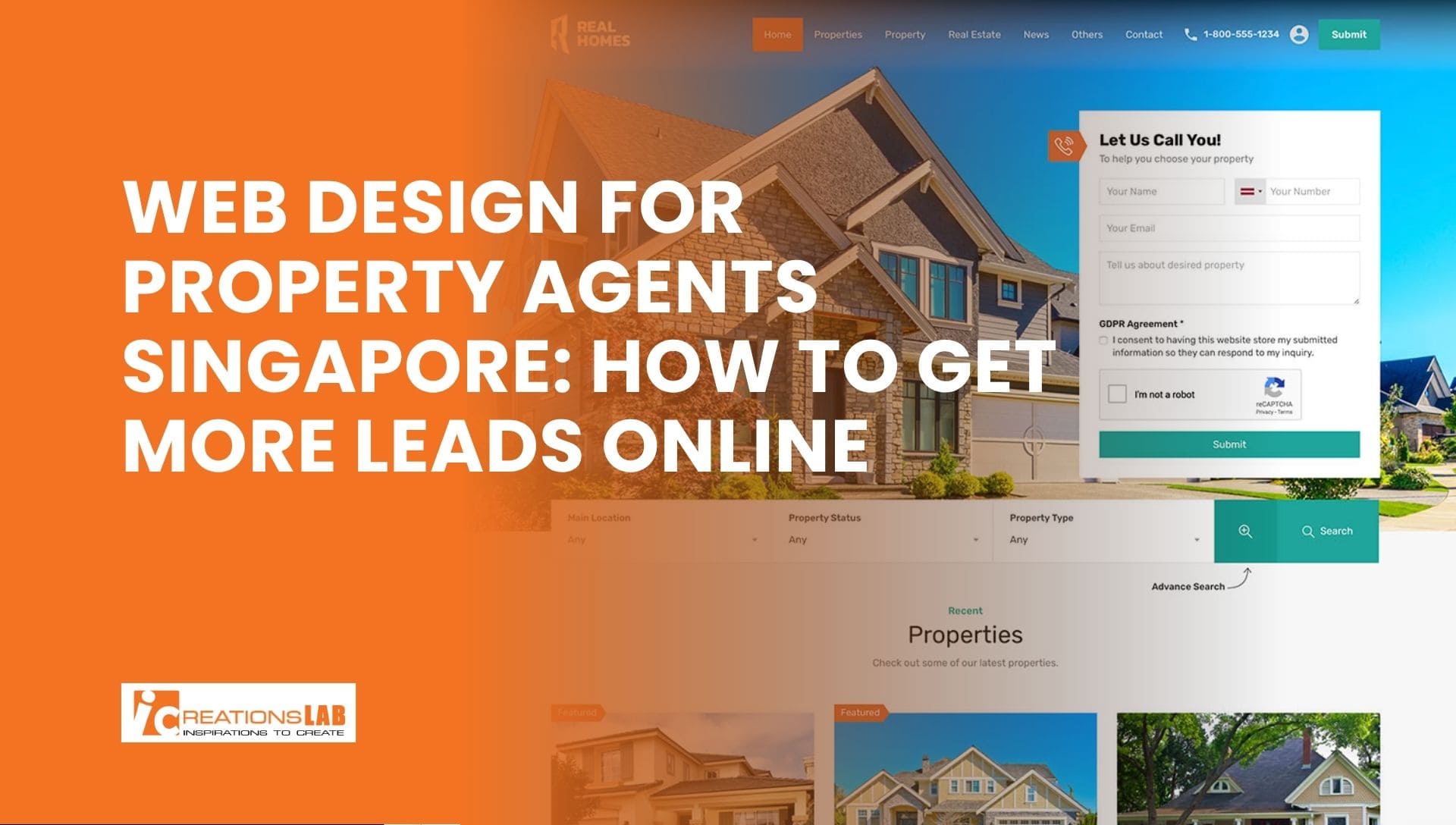
Buyers, sellers and tenants often compare several agents before they send a message. They look at your listings, your track record and how easy you are to reach. A website built for an agent does three jobs: it shows who you are, it showcases your listings and areas, and it makes it easy to start a WhatsApp conversation. iCreationsLab designs and builds websites for property agents and agencies in Singapore.
Who this service is for
- Individual property agents who want their own website, not only a portal profile.
- Agent teams and small agencies that need a shared site with agent profiles.
- Specialists in particular property types or estates who want to be found for them.
- Agents who run campaigns and need a landing page for a project launch.
What an agent website includes
| Section | What it does for your clients |
|---|---|
| About you | Your photo, story, specialisation and areas you cover, so clients know who they will work with. |
| Listings or featured projects | Pages for the properties and projects you handle, with photos, key details and an enquiry button. |
| Area and project pages | Useful pages for the estates and projects you genuinely specialise in, written with real information. |
| Testimonials | Client feedback, shown only where you have permission to use it. |
| Enquiry and WhatsApp | A short form and a prominent WhatsApp button, since many clients prefer to message first. |
| Contact details | Your agent details and contact information, shown clearly and consistently. |
| Valuation or consultation request | A simple form for sellers who want to discuss pricing. |
Why an agent needs a website as well as portal listings
Property portals are useful for reaching buyers and tenants, but they show your listing next to many others, and the portal controls the layout, the ranking and often the follow-up. Your own website is the one place where you decide how you are presented, what a visitor sees first and how enquiries reach you. It also gives you something that stays with you as you move between agencies or change your focus. Think of the portals as one source of visitors, and your website as the place where the relationship with a client can continue.
What clients look for on an agent’s website
- Who you are: a clear photo, your name, your agency and what you specialise in, such as resale flats, condominiums, landed homes or rentals.
- Where you work: the estates and districts you know well, written with real knowledge and not generic text.
- What you have done: examples of properties you have handled, where you can share them, described accurately.
- How to reach you: a visible phone number and WhatsApp button, and a short form for those who prefer to write.
- What happens next: a simple explanation of how you work with buyers, sellers and tenants, so the first message feels easy to send.
Built for how clients contact agents
- WhatsApp first: one-tap buttons on every page.
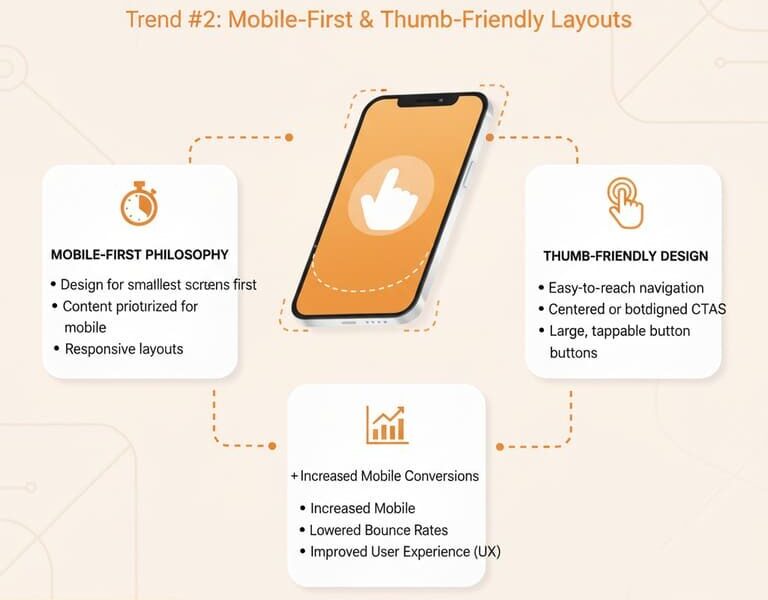
- Mobile first: pages that load fast and read well on a phone.
- Lead tracking: we set up tracking for form submissions and WhatsApp clicks, so you can see which pages bring enquiries.
- Local search ready: your name, area and contact details are set up consistently, so the site supports your Google Business Profile. See our local SEO guide.
Licensed agents must follow the Council for Estate Agencies’ rules on advertising, including the details that must appear in your advertising. Please check CEA’s current guidelines. We build the content you approve.
Project launch pages
If you are promoting a new launch, a focused page can work better than a full website. See our landing page design service.
Advertising rules and client data
Property agents in Singapore operate under rules set by the Council for Estate Agencies (CEA), including requirements about the details that must appear in property advertisements. These apply to your website as well as to portal ads and social posts, so check CEA’s current guidance on advertising before content goes live. We design the structure and layout, and you approve the content, including the details shown for your agency and registration.
Your website also collects personal data from clients. Keep enquiry forms short, ask only for what you need to respond and explain how you will use the information. Avoid asking for identity numbers through a website form. Singapore’s data protection authority has issued guidance on when organisations may collect NRIC numbers, and a general enquiry does not need one. Add a privacy notice and consent wording, and follow the Personal Data Protection Act when you contact people later, including the Do Not Call rules for marketing messages.
Content that builds trust without overpromising
Property is a high-value decision, so clients are cautious about claims. Describe your approach and experience factually. Do not guarantee prices, speed of sale or results. Show testimonials only with the client’s permission, and do not publish confidential details of a transaction. Write area and project pages from real knowledge: amenities, transport, schools, typical property types and what makes the neighbourhood different, with sources where you cite facts.
Keeping listings and project information up to date
Out-of-date listings damage trust quickly. Decide how you will manage them before the site is built. You can add them manually in the WordPress admin, feature only a few selected properties, or link to your current portal listings. Remove or mark properties that have been sold or rented, and add a date to market commentary so visitors know it is current. A short list of well-maintained items is better than a long list of stale ones.
Making the website work for local search
Many clients search for an agent with a place name or property type in the query. A website supports this when each important area or specialisation has its own page, your name and contact details are consistent across the site and your Google Business Profile (if you have one), and the schema markup identifies you as a real estate agent. Reviews on Google can also help, if you ask clients who are happy to leave them. Our guide to local SEO in Singapore explains how these pieces fit together.
Our process
- Discovery and strategy: we learn about your business, audience and goals.
- UI/UX design and wireframes: page layouts and design concepts for your approval.
- Development and build: we build the site and set up your content.
- SEO and technical setup: page titles, structure, speed and tracking.
- Quality assurance testing: checks across devices and browsers.
- Launch and training: go-live and a handover so your team can manage the site.
Packages and pricing
Our website packages start from SGD 2,999. An individual agent often fits the Basic or Professional package. A team or agency with several agent profiles and many pages may need the Custom package. We confirm the price in a written quotation.
| Package | Starting price | What is included | Typical timeline |
|---|---|---|---|
| Basic | From SGD 2,999 | Ready-made design (2 options), up to 2 main pages and 5 content pages, mobile-friendly layout, basic contact form, WordPress CMS, basic security, Zoom handover training and lifetime email support. | 4 to 6 weeks |
| Professional | From SGD 4,999 | Everything in Basic plus a custom design, up to 4 main pages and 10 content pages, 5-article setup for SEO, 2 smart contact forms, 2 design revisions, and 1 year of free hosting and domain. | 6 to 8 weeks |
| Custom | From SGD 8,999 | Fully custom design with 2 concepts, up to 8 main pages and 25 content pages, 3 advanced contact forms, Google Analytics and basic tracking setup, and up to 10 AI-generated images. | 6 to 10 weeks |
See what affects the price in our guide to website design cost in Singapore.
Frequently asked questions
How much does a property agent website cost in Singapore?
Our website packages start from SGD 2,999 (Basic), SGD 4,999 (Professional) and SGD 8,999 (Custom). We confirm the price in a written quotation.
Do I still need a website if I list on property portals?
A portal shows you next to many other agents. Your own website is your own space, where you control the message and collect enquiries directly.
Can clients message me on WhatsApp from the website?
Yes. We add WhatsApp buttons on every page and track the clicks.
Can I update listings myself?
Yes. The site is built on WordPress, and we provide handover training.
How long does it take?
Our packages are planned at 4 to 6 weeks (Basic), 6 to 8 weeks (Professional) and 6 to 10 weeks (Custom).
Can a team of agents share one website?
Yes. A team or agency site can have a profile page for each agent, shared listings and one set of brand pages. Each agent’s page should have their own contact buttons so enquiries reach the right person. The Custom package is usually the better fit for this setup.
Should I create a separate website for each project launch?
Usually not. A dedicated landing page for each launch is easier to manage and can reuse your main brand and contact details. A separate site only makes sense if the project needs its own identity and long timeline. Check any rules from your agency or the developer on how launches can be advertised.
Can I put my agency’s branding on my personal website?
That depends on your agency’s policy. Some agencies provide brand guidelines or want to approve agent websites. Check with your agency before using their logo, and make sure the details required by CEA appear correctly.
Can the website connect to my CRM or email list?
In many cases yes. Enquiry forms can send leads to your email, a spreadsheet or a CRM, depending on the tools you use. Tell us what you currently use so we can plan it during discovery.
Related reading
- Local SEO Singapore: How to Rank Your Business on Google Maps in 2026: Help clients find you when they search for an agent near them.
- Mobile Friendly Websites: Why They Matter for SEO: Most property enquiries start on a phone.
- 7 Common Web Page Design Mistakes That Drive Visitors Away: Avoid the layout mistakes that make visitors leave before they contact you.
| Ready to get a website that brings in enquiries? Call us on +65 6269 9558 (Monday to Friday, 10am to 6pm), message us on WhatsApp or use the contact form to request a free consultation. You can also see our web design services in Singapore. |